







Your entryway is the first impression of your home and the last thing you see before you leave. It's also, almost always, the narrowest functional space in the house. A console table for entryway use has to thread a specific needle: provide a landing zone for keys, mail, and bags without turning a 4-foot-wide hallway into a squeeze. The difference between a hallway that feels open and one that feels like a corridor comes down to 2 inches of table depth. This is how to get the math right.
The 36-Inch Rule: Why Depth Is the Only Dimension That Matters First
Building codes and basic ergonomics agree on one number: you need at least 36 inches of clear walking space in a hallway. That's the minimum for two people to pass each other without turning sideways, and the minimum for moving furniture or groceries through without bumping walls.

Most residential entryways are 42 to 54 inches wide. That's not a lot of room to work with. Every inch of console table depth eats directly into your walking space.
Here's the math for common entryway widths:
Entryway Width vs. Maximum Console Depth
| Entryway Width | Max Table Depth | Remaining Walkway |
|---|---|---|
| 42" | 6" (shelf only) | 36" |
| 48" | 12" | 36" |
| 54" | 16-18" | 36-38" |
| 60"+ | 18-24" | 36-42" |
For most homes, that puts the ideal entryway console table depth between 12 and 14 inches. Deep enough to hold a table lamp, a small tray for keys, and a stack of mail. Shallow enough that nobody has to shimmy past it on the way out the door.

Height: The Waist-Height Sweet Spot
Standard console table height runs from 30 to 36 inches, with 32 to 34 inches working best for most people. There's a practical reason for this range: it aligns roughly with waist height for adults between 5'4" and 6'0". That's the height where you naturally drop things. Keys, sunglasses, a bag. You don't reach up and you don't bend down. You just set them on the surface as you walk past.
Too low (under 30 inches) and the console starts functioning more like a bench. Too high (over 36 inches) and it feels like a bar counter in your hallway. The 32-34" range keeps the table functionally invisible, which is exactly what you want from a piece of furniture in a transition space.
"The best entryway furniture is the kind you don't think about. You walk in, drop your keys, and keep moving. That only works when the table sits at natural hand-drop height."
Length: The Two-Thirds Rule
A hallway console table should cover roughly two-thirds of the wall it sits against. This ratio keeps the table from looking like an afterthought (too short) or a barricade (too long). On a 60-inch wall, that means a 40-inch console. On a 48-inch wall, a 32 to 36-inch table.
For genuinely small entryways, a 36-inch-long console table provides full functionality without crowding. That's enough surface for a lamp on one end, a catch-all tray in the center, and a small plant or frame on the other end. Anything shorter and you're working with a glorified shelf. Anything longer in a tight space and the table dominates instead of supporting.
Why Open-Frame Designs Win in Narrow Spaces
Closed-front console tables with drawers and solid panels create a visual wall in your entryway. In a wide foyer, that's fine. In a narrow hallway, it makes the space feel tighter than it actually is.
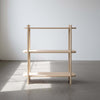
Open-frame designs, where you can see through the legs to the wall and floor behind the table, do two things. First, they let light pass through, which makes a narrow hall feel wider. Second, they give you usable space underneath for shoe storage, a basket, or a low shelf without adding visual bulk.
This is where material matters. A narrow entryway table built from 13-ply premium-grade plywood can use thinner structural elements than one made from solid wood or MDF, because the cross-laminated layers give it strength without thickness. The result is a table that holds weight without looking heavy.
The UNFNSHED Console Table: Built for the Depth Problem
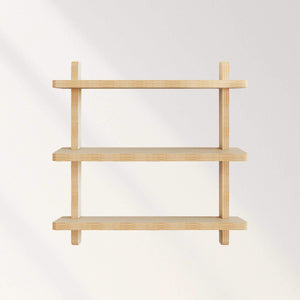
UNFNSHED Modern Console Table
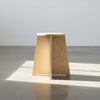
Built from 13-ply premium-grade plywood in San Diego. Open-frame design that keeps narrow entryways feeling spacious. Tool-free assembly in under 2 minutes. Ships unfinished so you can paint, stain, or oil it to match your entryway exactly.
1,060+ reviews. 94% five-star. Browse the full entryway furniture collection or see all products.
The open design matters here more than in almost any other room. A narrow entryway table needs to provide function without presence. You want the table to hold your things, not announce itself. The exposed birch edge grain gives it character up close without visual weight from across the room.
Because it ships unfinished, you can match it to your entryway's exact palette. A matte white finish blends into light walls and disappears. A dark walnut stain creates a deliberate contrast piece. Natural oil lets the birch plywood grain show through. Our guide to 7 easy ways to paint unfinished wood furniture covers every technique. And if you're going for a clean, minimal look, our Japandi style guide breaks down how unfinished wood fits that aesthetic without spending a fortune.
Assembly is tool-free and takes under 2 minutes, which matters when you're setting up furniture in a tight hallway where there's no room to spread out parts and hunt for an Allen wrench. Our complete guide to tool-free furniture assembly walks through the full process.
Foyer Table Ideas: 3 Setups by Entryway Size
Small entryway (42-48" wide): Use a 36" long, 12" deep console table. Keep the surface minimal: one small tray for keys and wallet, nothing else. Skip the table lamp and use a wall-mounted light instead to save surface space. The goal is a landing pad, not a display.
Medium entryway (48-60" wide): A 42-48" console at 14" deep gives you room for a lamp on one end, a tray in the center, and a small piece of art or mirror above. Add a basket underneath for shoes. This is the most common setup and where most entryway console tables live.
Large foyer (60"+ wide): You have room for a full 48-54" console at 16-18" deep. Layer the surface with a lamp, books, a vase, and a decorative tray. Use the floor space underneath for two baskets or a low bench. Large foyers can handle visual weight, so don't hold back.
Frequently Asked Questions
How deep should a console table be for a narrow entryway?
For a narrow entryway, keep your console table depth between 12 and 14 inches. This preserves the 36 inches of clear walking space that hallways need. If your entryway is 48 inches wide, a 12-inch-deep table leaves exactly 36 inches of passage. Anything deeper than 14 inches in a standard hallway starts to feel cramped.
What is the ideal height for an entryway console table?
The ideal height is 32 to 34 inches, which aligns with waist height for most adults. This lets you drop keys, mail, and bags onto the surface naturally without reaching up or bending down. Standard console tables range from 30 to 36 inches, but the 32-34 inch sweet spot works for the widest range of people and uses.
How long should a console table be relative to the wall?
A console table should cover roughly two-thirds of the wall it sits against. On a 60-inch wall, that means a 40-inch console. On a 48-inch wall, aim for 32 to 36 inches. Going shorter makes the table look like an afterthought, while going longer can make a small entryway feel crowded. For very small entryways, a 36-inch console provides full functionality without overwhelming the space.