


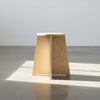




The moment I pulled my sofa away from the wall and slid a console table behind it, my living room stopped being a single rectangular room and started feeling like two distinct spaces. The sofa, which had been pushed flat against the wall since move-in day, now floated in the room with purpose. Behind it, a narrow table held a lamp, a stack of books, and a trailing plant. In front of it, the TV area. Behind it, a reading nook by the window. One piece of furniture, one spatial shift, and the room felt twice as intentional.
That's what a console table for living room use actually does. It's not storage. It's not a desk. It's a zone-maker.
Living Room Console vs. Entryway Console: Different Jobs
Most advice about console tables assumes you're putting one in an entryway. Drop your keys, check the mail, glance in a mirror. That's a valid use, but it's not what a living room console does.

In the living room, a console table almost always goes behind the sofa. Its job is different:
- Entryway console: Catch-all surface near the front door. Holds keys, mail, maybe a bowl for change. Functional and transitional.
- Living room console: Creates a visual and spatial boundary between zones. Holds lamps (providing ambient light from behind the sofa instead of overhead), books, decorative objects, and sometimes a speaker or small plant. It's architectural as much as it is functional.
The placement changes what matters. An entryway console needs to be narrow because hallways are tight. A living room console needs to be the right height relative to your sofa back, because that's the relationship that defines whether it looks intentional or awkward.

The Height and Depth Rules
Getting these two measurements right is the difference between a console table that looks built-in and one that looks like it wandered in from another room.
Height: Match or Slightly Below the Sofa Back
Your console table should be within 1-2 inches of your sofa back height. For most sofas, that puts the ideal console table height at 30-36 inches from the floor.
- Table even with sofa back: Creates a seamless line when viewed from the front. The table and sofa read as one composed unit. This is the cleanest look.
- Table 1-2 inches below: Still works well. The sofa back provides a slight visual screen so you don't see the full table surface from the seating side. Good for hiding charging cables or less photogenic items.
- Table taller than sofa back: Generally avoid this. A console table that rises above the sofa back creates a visual wall behind the couch and disrupts the flow of the room. The exception is if you're using the console to hold a tall lamp, in which case the lamp is the tall element, not the table.
Depth: 12-16 inches. This is the sweet spot. Anything less than 12 inches and the table can't hold a lamp base without feeling precarious. Anything more than 16 inches and the table starts to eat into the walkway behind the sofa. If your living room has a traffic path behind the couch, keep the depth at 12-14 inches. If the console sits against a wall with no foot traffic behind it, you can go up to 16 inches.
What Goes on a Living Room Console Table
This is where most people either overthink it or underthink it. The console becomes either a carefully curated museum display (rigid, untouchable) or a dumping ground for everything that doesn't have a home (cluttered, stressful). The right approach is somewhere between.
The Three-Zone Layout
Divide your console table surface into three visual zones, even if you don't physically mark them:
- Zone 1 (one end): A lamp. This is the most impactful single object you can put on a console table. A lamp behind the sofa creates warm, diffused light that bounces off the wall and fills the room from behind. It replaces the need for harsh overhead lighting in the evening and makes the entire seating area feel warmer.
- Zone 2 (center): A stack of books or a tray with small objects. Three to five books stacked horizontally with a small object on top (a ceramic dish, a candle, a small sculpture) gives the center of the table visual weight without clutter.
- Zone 3 (other end): A plant or a single decorative object. Something organic to balance the lamp on the opposite end. A trailing pothos in a simple pot works. A framed photo propped against the wall works. One thing, not five.
The empty space between zones matters as much as the objects themselves. If you can see the table surface between each zone, the arrangement reads as intentional. If every inch is covered, it reads as a shelf you ran out of room on.
"A console table behind the sofa isn't about adding more surface area to your living room. It's about creating a reason for the sofa to be where it is."
Pulling the Sofa Off the Wall: Why It Works
Most living rooms default to the same layout: sofa against the longest wall, TV on the opposite wall, everything else arranged in the gaps. It works, but it treats the room as one zone. Pulling the sofa even 14-16 inches away from the wall and sliding a console table into that gap changes the geometry of the room.
Suddenly there's a front-of-sofa zone (conversation, TV, coffee table) and a behind-the-sofa zone (whatever you want: reading area, workspace, display). The console table is the border between them. It gives the sofa a finished back instead of that awkward view of upholstery and dust when you walk behind it.
This works in rooms as small as 12 x 14 feet, as long as you keep the console table depth at 12-14 inches. You're not losing significant floor space. You're gaining a second functional zone and a dramatically different feel.
Material and Finish for a Living Room Console
A console table in the living room gets seen from multiple angles: from the sofa, from the dining area, from the kitchen if it's an open floor plan. That means the material needs to look good from every direction, including the back edge.
13-ply premium-grade plywood is particularly strong for console tables because the exposed edge grain is visible and attractive from all sides. Those 13 alternating plies create a striped edge pattern that looks intentional whether you're viewing the table from the front, the side, or from behind the sofa looking at the back edge.
For style direction, our japandi style on a budget guide covers how natural wood console tables anchor a minimalist living room. And for material details, plywood furniture: beauty, quality, and iconic design explains why premium-grade plywood has been a staple of high-end furniture design for decades.
The UNFNSHED Console Table
Built from 13-ply premium-grade plywood in San Diego. Assembles in under two minutes with no tools. Ships unfinished so you can stain it, paint it, oil it, or leave it raw. 1,060+ reviews, 94% five-star.
Console Table for Living Room Use
- Modern Console Table - Clean lines, tool-free assembly, premium-grade plywood construction. The right height and depth for behind-sofa placement. Unfinished and ready for whatever finish suits your room.
Browse entryway and living room furniture | Shop all products