Japandi Style on a Budget: Your Minimalist Furniture Guide
You don't need a designer's budget to create a home that feels like a deep breath. Japandi style — the beautiful intersection of Japanese minimalism and Scandinavian warmth — is one of the most approachable aesthetics out there. And if you know where to look, building a Japandi space can be surprisingly affordable.
Let's break down what Japandi actually is, why it works so well, and how to get the look without emptying your savings account.
What Is Japandi Style, Anyway?
Japandi is exactly what it sounds like: a fusion of Japanese and Scandinavian design philosophies. Two cultures separated by thousands of miles that arrived at remarkably similar conclusions about how a home should feel — calm, intentional, and grounded in natural materials.
From Japan comes the concept of wabi-sabi, the appreciation of imperfection and the beauty of natural aging. From Scandinavia comes hygge, that cozy warmth that makes you want to linger over a cup of coffee on a rainy afternoon. Put them together, and you get spaces that are clean but not cold. Simple but not boring. Minimal but deeply livable.
The japandi furniture trend has taken off for good reason. In a world that constantly demands more, there's something genuinely refreshing about a design philosophy that says: less, but better.
The Four Principles of Japandi Design
Before you start shopping, it helps to understand what makes Japandi tick. Every piece in a Japandi space should check at least one of these boxes:
1. Natural Materials
This is the foundation. Both Japanese and Scandinavian design traditions lean heavily on wood, stone, linen, and other organic materials. You won't find much plastic or chrome in a Japandi home. The grain of the wood matters. The texture of the fabric matters. Materials aren't just functional — they're part of the aesthetic.
This is why unfinished or lightly finished wood works so beautifully in Japandi spaces. You're not hiding the material under layers of lacquer. You're celebrating it.
2. Clean Lines
Japandi furniture favors simple, geometric forms. No ornate carvings, no fussy details. A shelf is a shelf. A table is a table. The beauty comes from proportion and craftsmanship, not decoration. Think straight edges, gentle curves, and shapes that feel both modern and timeless.
3. Functional Beauty
In Japandi design, everything earns its place. There's no room for furniture that's purely decorative — every piece should serve a purpose. But "functional" doesn't mean ugly. The Japanese concept of yo no bi (beauty in everyday use) captures it perfectly: the things you use every day should be the most beautiful things you own.
4. Muted, Earthy Colors
Japandi palettes are soft and grounded. Think warm whites, sand, sage, charcoal, and the natural honey tones of raw wood. Pops of color are rare and deliberate — maybe a single terracotta vase or a deep navy cushion. The overall feeling should be restful, not stimulating.
Why Unfinished Furniture Is a Japandi Secret Weapon
Here's where things get interesting — and where finding minimalist furniture affordable becomes genuinely possible.
Most Japandi-inspired furniture from big retailers comes with a premium price tag. You're paying for that curated "effortless" look. But the irony is that Japandi is fundamentally about raw, honest materials. The most authentic Japandi look often comes from furniture that hasn't been fussed over at all.
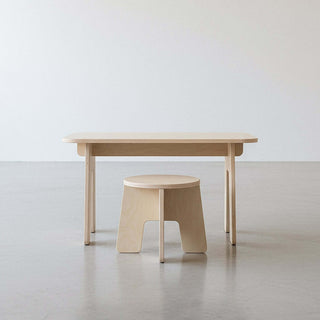
Unfinished furniture — like the pieces from UNFNSHED — gives you a natural wood surface that already looks at home in a Japandi space straight out of the box. The visible grain, the light natural color, the tactile warmth of real plywood — it's wabi-sabi in physical form.
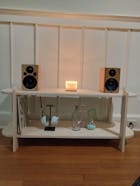
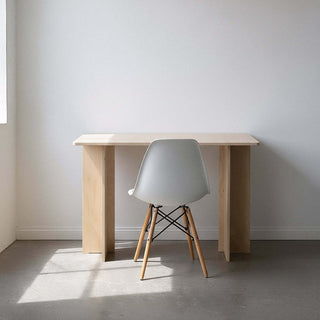
And here's the budget angle: because you're not paying for expensive finishing processes, unfinished furniture costs significantly less than comparable finished pieces. A beautifully designed side table for $39. A modern shelf for under $100. A full console table for $179. These are real prices for real, well-designed furniture made from furniture grade plywood.
You're not sacrificing quality for affordability. You're just skipping the markup that comes with someone else's finishing choices.
UNFNSHED Pieces That Nail the Japandi Look
Let's get specific. Here are pieces from UNFNSHED's collection that fit the Japandi aesthetic like they were designed for it (honestly, the clean-lined, natural wood DNA of the brand makes almost everything in the catalog a candidate):
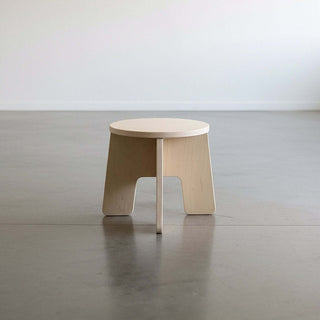
The Side Table (from $39)
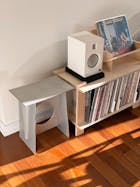
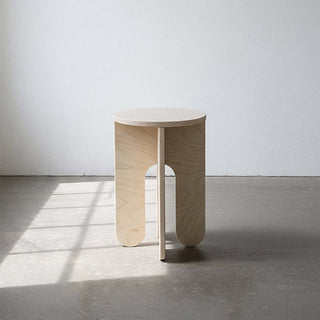
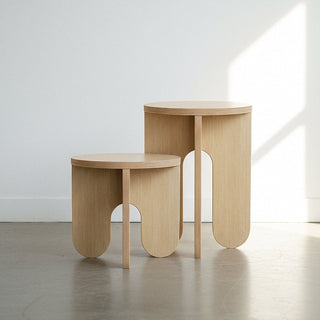
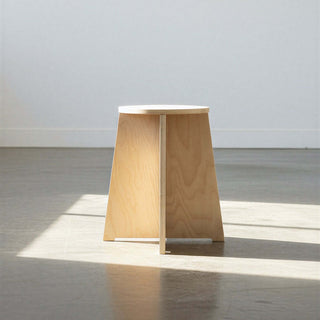
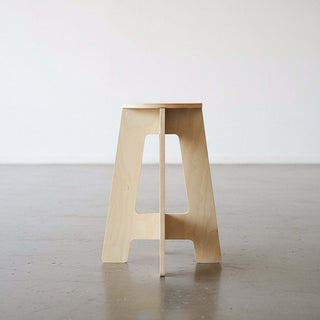
The UNFNSHED Side Table is Japandi in its purest form — a clean geometric shape in natural plywood that works next to a sofa, beside a bed, or as a standalone accent piece. The 12-inch version at $39 is genuinely hard to beat for a piece this well-designed. For more surface area, the 18-inch version runs $99.
Leave it raw for that authentic wabi-sabi feel, or add a light whitewash for a Scandinavian lean.
The Modern Shelf (from $99)
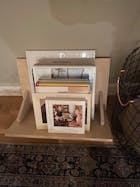
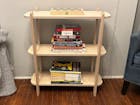
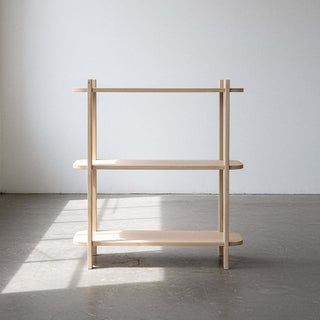
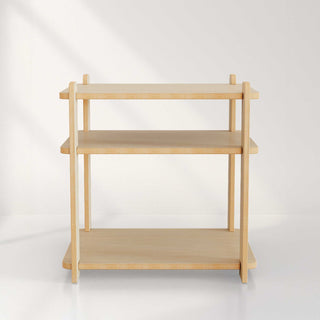
Open shelving is a staple of Japandi interiors — a way to display a few carefully chosen objects without cluttering a room. The UNFNSHED Modern Shelf comes in two-tier, three-tier, and four-tier configurations, with regular and large sizes. The clean lines and exposed plywood edges are pure Japandi.
Style it with a few books, a ceramic vase, and plenty of breathing room between objects. Remember: in Japandi, what you don't put on the shelf matters as much as what you do.
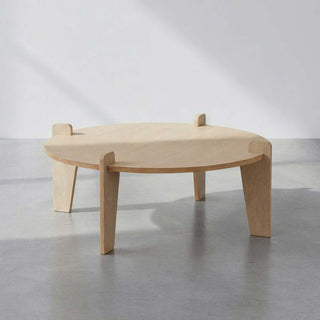
The Round Coffee Table (from $119)
The Round Coffee Table brings organic curves into a Japandi living room. The single-level version starts at $119, while the double-level ($169.99) adds a lower shelf for books or a plant. The rounded form softens a room full of straight lines — a very Japanese design move.
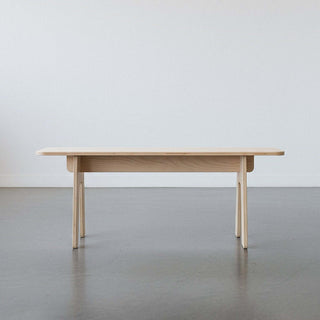
The Modern Bench (from $99)
Japandi spaces love multi-functional furniture, and a bench delivers. Use it at a dining table, in an entryway, or at the foot of a bed. The UNFNSHED Modern Bench comes in oval and rectangle profiles at 31-inch ($99) and 46-inch ($149) lengths. The oval version, with its softened edges, is especially Japandi.
Wall Shelves (from $49)
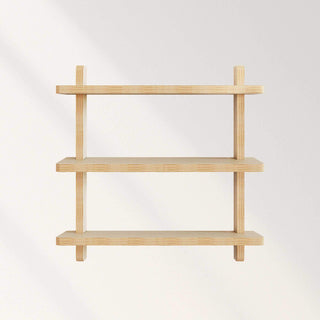
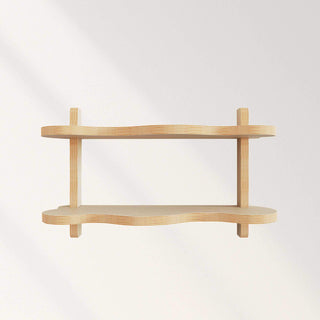
Floating shelves are a Japandi essential. The UNFNSHED Wall Shelves start at just $49 for a set of two, in multiple lengths and depths. For something with more personality, the Wavy Wall Shelves add a subtle organic curve that nods to Japanese design without going over the top.
The Monitor Stand (from $79)
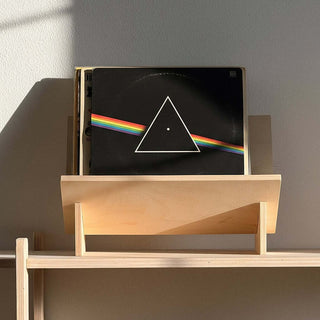
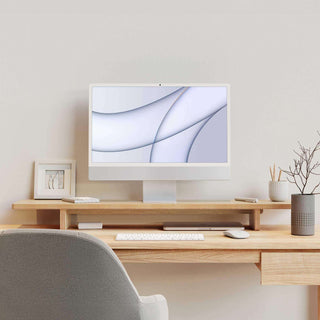
Even your workspace can go Japandi. The Monitor Stand elevates your screen on a clean platform of natural wood. The oval version adds a touch of softness that feels very on-aesthetic.
DIY Finishing Tips for a Japandi Look
One of the best things about starting with unfinished furniture is that you control the final look. Here are some finishing approaches that play beautifully with Japandi style:
Leave it raw. Seriously. Unfinished furniture grade plywood has a warm, natural tone that's already Japandi. If you want minimal protection without changing the color, apply a clear matte polyurethane or a natural wax. The wood stays looking like wood.
Try a light whitewash. Mix white paint with water (roughly 1:1) and brush it on, then wipe off the excess with a rag. You'll get that pale, airy Scandinavian look while the wood grain still shows through. This is probably the most popular Japandi finish.
Go with a muted stain. Think driftwood gray, weathered oak, or a light walnut. Avoid anything too dark or too red — you want the stain to look like the wood aged naturally, not like it was painted.
Explore shou sugi ban. This Japanese wood-burning technique creates a stunning charred texture that's deeply Japandi. A lighter pass with a torch followed by wire brushing gives a beautiful, subtle result. (Practice on scrap first!)
Use natural oils. Tung oil or Danish oil brings out the grain while providing a matte, natural-looking finish. Two coats, sanded lightly between applications, and you're done.
Embrace imperfection. This is the heart of wabi-sabi. Don't stress about getting a perfectly even coat. Slight variations, visible brush strokes, and natural wood character aren't flaws — they're features. They're what make your piece yours.
Putting It All Together
Building a Japandi space on a budget comes down to a simple formula: invest in well-designed pieces made from honest materials, keep your palette muted and natural, and resist the urge to fill every corner.
Start with one or two key pieces — maybe a shelf and a side table — and let the room breathe. Add a plant in a simple ceramic pot. A linen throw in a neutral tone.
The beauty of japandi furniture isn't about any individual piece. It's about the whole room — that calm, grounded, this is enough feeling that good design creates.
And when your furniture starts at $39 and arrives ready for whatever finish (or non-finish) you choose? That feeling becomes remarkably accessible.
---
Explore the full UNFNSHED collection at unfnshed.com — minimalist furniture affordable enough to furnish a whole room, beautiful enough to furnish a whole mood.
 No-Tool 60 sec Assembly
 Rated 4.88 out of 5


 Ani
Ani

 K.S.
K.S.
 Vidal
Vidal



 Satisfaction Guaranteed
 Estimated delivery: 2 - 3 days
 14 Day Hassle-free returns
 Taxes and shipping calculated at checkout