

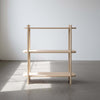

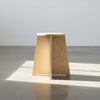
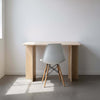
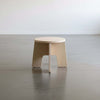


Here's something nobody talks about when shopping for shelves for living room spaces: your living room is the only room in your house that has to perform for an audience. Bedrooms are private. Kitchens are functional. But the living room? That's where guests sit, where eyes wander, where every object on every shelf gets silently evaluated. And yet most people pick living room shelves the same way they'd pick garage storage - by price and size, with zero thought about what the shelf actually needs to do in that specific room.
The Numbers Behind Living Room Shelving That Actually Works
Let's get specific, because vague advice is useless advice. After years of building display shelves from 13-ply premium-grade plywood in our San Diego shop, we've learned that living room shelving has different dimensional requirements than shelving anywhere else in the house.

Most living room shelving ideas you'll find online ignore the relationship between shelf depth and the viewing angle from a seated position. When someone is sitting on your couch - which is, you know, the primary activity in a living room - they're looking at your shelves from roughly 3.5 to 4 feet off the ground, at an angle. That means:
- Shelves mounted above 60" from the floor become visual dead zones from the couch. Great for storage, terrible for display.
- The sweet spot is 24" to 54" off the ground - that's where your best objects should live.
- Shelf spacing of 10–14" works for most living room items (books, plants, ceramics). Go taller only if you're displaying bottles or tall vases.
Three Setups That Actually Work (With Specific Picks)
Here's where most living room shelving ideas articles fall apart - they show you a pretty photo and say "get the look!" without telling you what dimensions or configuration you actually need. So let's do this differently.
Setup 1: The Statement Wall
Best for: Living rooms where the TV isn't the focal point (or you want to compete with it).
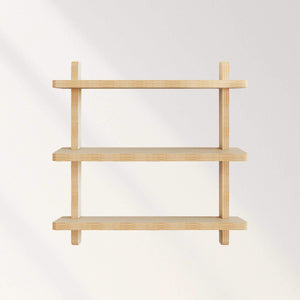
What you need: Two or three Large Modern Shelves arranged asymmetrically on the same wall. Not centered. Not perfectly spaced. Offset them by 4–6 inches vertically for visual interest.
Why it works in living rooms specifically: Guests' eyes need somewhere to land during conversation. A statement shelf wall gives people something to look at that isn't the person across from them - which, if you've ever sat in an awkward silence in a bare-walled living room, you know matters.
Display rule: Keep each shelf to 3–5 objects max. One tall, one medium, one small. Leave at least 30% of the shelf surface empty.
Setup 2: The Flanking Pair
Best for: Framing a window, fireplace, or TV.
What you need: Two Double Modern Shelves, one on each side of whatever you're framing. Mount them at matching heights - this is the one time symmetry wins.
Why it works in living rooms specifically: Living rooms have natural focal points (the TV, a fireplace, a big window). Flanking shelves reinforce that focal point instead of competing with it. This is the setup that makes a room feel intentional rather than decorated.
Display rule: Mirror the visual weight on each side, not the exact objects. A stack of three books on the left, a medium plant on the right. Balance, not matching.
Setup 3: The Modular Stack
Best for: Renters, small living rooms, or anyone who rearranges furniture seasonally.
What you need: A Modular Modern Shelf system. Assembles in under 2 minutes, no tools, and you can reconfigure or relocate without patching wall holes.
Why it works in living rooms specifically: Living rooms have the highest traffic of any room. Furniture gets bumped. Kids run through. Modular shelving that's built from 13-ply premium-grade plywood can take the hits without wobbling, and the interlocking joint system means you can disassemble and rearrange when you move the couch for the third time this year.
Display rule: Use the lower shelves for heavier, sturdier items. Upper shelves get lighter objects. Gravity and toddlers will thank you.

Modern Living Room Shelves: Finished vs. Unfinished
Pre-Finished Shelves
- What you see is what you get - no customization
- Typically particle board or MDF with a laminate veneer
- Scratches show the substrate underneath (not pretty)
- Color matched to this year's trend, dated by next year
Unfinished Premium-Grade Plywood (UNFNSHED)
- Paint, stain, oil, or leave raw - your call
- 13-ply plywood means the edge grain is a design feature, not a flaw
- Scratches add character instead of revealing cheap filler
- Matches your living room because you choose the finish to match your living room
This matters more in living rooms than anywhere else. Your living room palette - the couch fabric, the rug, the wall color - is specific. Off-the-shelf (pun intended) finishes rarely match. When you start with unfinished wall shelves, you can sample stains against your actual wall color, in your actual lighting, before committing. We wrote a full guide on 7 easy ways to paint unfinished wood furniture if you want the how-to.
"The living room is the only room where your furniture has to look good from every angle - standing, sitting, and walking past. Shelves that work here have to work harder than shelves anywhere else."
What Most People Get Wrong About Display Shelves for Living Room Spaces
The biggest mistake isn't picking the wrong shelf. It's treating living room shelves like storage. A living room shelf with 15 objects crammed onto it reads as clutter from the couch. The same shelf with 4 well-chosen objects reads as intentional.
The second biggest mistake is ignoring the relationship between your shelves and your traffic patterns. If you have to walk past a shelf to get from the hallway to the couch, nothing breakable goes on that shelf below hip height. Sounds obvious. Visit ten living rooms and you'll see it violated in eight of them.
For more on how modular designs handle these challenges, check out our breakdown of furniture assembly guide. And if you're working with a smaller footprint, browse our apartment furniture collection - everything's scaled for real-life spaces, not showroom square footage.
The material matters too. There's a reason designers keep coming back to plywood furniture - premium-grade plywood has a warmth and visual grain that works in living rooms where MDF and particle board look flat and cheap. Especially when you're choosing display shelves for living room use, where the shelf itself is part of the display.
Every UNFNSHED shelf ships flat, assembles in under 2 minutes with zero tools (interlocking joints - no Allen wrenches, no cam locks, no cursing), and is made from 13-ply premium-grade plywood right here in San Diego. Browse the full display shelf collection and find the setup that fits your living room - not someone else's.
Frequently Asked Questions
What depth should shelves for living room use be?
For display-focused living room shelves, aim for 8 to 12 inches deep. This range fits hardcover books spine-out, standard potted plants, and most decorative objects without items getting lost in the back. If you're mixing display and storage, 10 inches is the sweet spot.
How high should I mount modern living room shelves?
Place your main display shelves between 24 and 54 inches from the floor. This is the primary viewing zone from a seated position on the couch. Anything above 60 inches becomes hard to appreciate from the most common vantage point in the room - sitting down.
Can unfinished shelves work in a styled living room?
Absolutely - that's the whole point. Unfinished premium-grade plywood can be painted to match your exact wall color, stained to complement your flooring, or left raw for a Scandinavian or Japandi look. Starting unfinished means the shelf adapts to your room rather than the other way around. Check out our Japandi style guide for inspiration on the raw wood approach.