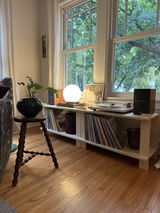
A wall shelf for living room use is not really about storage. You have closets and cabinets for storage. Wall shelves in the living room are display pieces. They frame your personality, show what you care about, and give visitors something to look at besides a TV. The difference between a shelf that looks intentional and one that looks like an afterthought comes down to three things: height, arrangement, and what you actually put on it.
This is the expert breakdown. No generic advice. Just the specific decisions that determine whether your wall shelves look curated or chaotic.
Height Placement: The Most Common Mistake
Most people hang wall shelves too high. They stand against the wall, reach up, and mark a spot at the top of their reach. This puts the shelf at 6 to 7 feet, which means you're looking up at the bottom of everything on it. Books show their spines from an awkward angle. Plants become ceiling decorations. The shelf disconnects from the rest of the room.

There are two correct approaches to height, and which one you use depends on what's below the shelf.
Eye-Level Gallery (standalone wall shelves)
When the shelf is on an open wall with nothing below it, center it at eye level: 57 to 60 inches from the floor to the middle of the shelf. This is the same height galleries use to hang artwork, and it works for the same reason. Your eye naturally rests at this height without tilting your head up or down. Objects on the shelf are seen straight-on, which is how they look best.
If you're stacking multiple shelves vertically, center the group at 57 to 60 inches. The top shelf might be at 68 inches and the bottom at 48 inches, but the visual center of the arrangement sits at eye level.
Above-Sofa Display (shelves over furniture)
When the shelf goes above a sofa, the rule changes. Place it 8 to 12 inches above the sofa back. This creates a visual connection between the shelf and the furniture below it, making them read as one composed arrangement instead of two separate things floating in space.
For a standard sofa with a 34-inch back height, that puts the shelf bottom at 42 to 46 inches from the floor. Lower than most people expect, but it works. The shelf becomes part of the sofa vignette rather than a disconnected element near the ceiling.
"The gallery standard is 57 inches to center. Every major museum uses it. Your living room should too."
Arrangement: Why Asymmetric Beats Symmetric
Your instinct is to buy matching shelves, space them evenly, and create a grid. Resist that instinct. Symmetric grid arrangements look rigid and impersonal, like a retail display. They also magnify any imperfection. If one shelf is a quarter inch off-level, the grid makes it obvious because your eye compares it to every other shelf in the pattern.
Asymmetric arrangements look more intentional because they feel considered. Instead of four identical shelves in a 2x2 grid, try two shelves at different heights with different lengths. Or three shelves staggered vertically with varying gaps between them. The key is that the arrangement should look balanced without being mirrored.
Some specific arrangements that work well:
- The stagger: Two or three shelves at different heights, offset horizontally so they don't stack directly above each other. Creates visual movement across the wall.
- The step: Three shelves arranged in a descending diagonal, like stair steps. Works especially well in corners or flanking a window.
- The anchor: One long shelf with a shorter shelf below it, offset to one side. The long shelf grounds the arrangement and the short shelf adds depth.
Mixing shelf styles reinforces the asymmetric approach. Pair straight-edge Wall Shelves with Wavy Wall Shelves for contrast in the same arrangement. The organic curve of the wavy shelf breaks up the linearity without clashing, especially in living rooms with a lot of straight-edged furniture.
What to Display (and How Much)
The most common styling mistake is overcrowding. A wall shelf with every inch filled looks cluttered, not curated. Leave 30 to 40 percent of the shelf surface empty. Negative space is what makes the objects you do display look chosen rather than crammed.
The rule of odds applies: groups of 3 or 5 objects look more natural than groups of 2 or 4. Vary heights within each group. A tall vase, a medium book stack, and a small ceramic creates a visual triangle that draws the eye.
What works on living room shelves:
- Small plants (trailing varieties like pothos look especially good on high shelves — see our plant shelves for ideas)
- Books (stack horizontally for a different look than your bookcase)
- Ceramics, pottery, or small sculptures
- Framed photos (lean them against the wall instead of hanging separately)
- Candles (unlit, for visual weight and texture)
What doesn't work: anything too heavy for the shelf's rating, anything you need to access daily (that's storage, not display), and anything that accumulates dust you won't clean (dried flower arrangements, I'm looking at you).
Material and Finish for Living Room Shelves
Living room shelves are visible from every seat in the room, which means material quality matters more here than in a bedroom or office. Thin, lightweight shelves that sag under a few books look cheap from across the room. Thick, solid shelves with clean edges look substantial.
The Modular Wall Shelf from UNFNSHED is 13-ply premium-grade plywood. The exposed edge shows all 13 layers, which reads as a design detail rather than a raw material. It's a specific aesthetic that works in mid-century modern, Scandinavian, and Japandi spaces. If you want to learn more about why plywood works as a design material, read our breakdown on plywood furniture and iconic design.
Because UNFNSHED shelves ship unfinished, you choose the final look. For living rooms, a few finishes work especially well:
- Matte white or matte black paint: Clean, gallery-like. The shelf disappears and the objects on it take center stage.
- Danish oil or tung oil: Brings out the wood grain with a natural, warm tone. Good for rooms with other wood elements.
- Raw/unfinished: The natural birch color is light, neutral, and works in minimal spaces without competing with other elements.
For Japandi-inspired living rooms, the unfinished or oil-finished look pairs naturally. Our Japandi style guide covers how to build this aesthetic without overspending.

Recommended Wall Shelves for Living Rooms
All made from 13-ply premium-grade plywood in San Diego, CA. Tool-free assembly. Ships unfinished. 1,060+ reviews, 94% five-star.
- Wall Shelves - Clean, straight edges. Classic display shelf for any arrangement style.
- Wavy Wall Shelves - Organic, curved profile. Adds visual contrast to linear living room furniture.
- Modular Wall Shelf - Configurable layout. Build custom arrangements that fit your specific wall dimensions.
Browse all wall shelves | Shop display shelves
Keep Reading
Japandi Style on a Budget Plywood Furniture and Iconic Design Wall Shelves Collection Display ShelvesFAQ: Wall Shelf for Living Room
How high should I hang a wall shelf in my living room?
For standalone wall shelves with nothing below them, center the shelf at 57 to 60 inches from the floor, which is standard gallery height. For shelves above a sofa, mount them 8 to 12 inches above the sofa back. This keeps the shelf visually connected to the furniture below it. Shelves mounted higher than 65 inches feel disconnected and are difficult to style or access.
Should wall shelves match the rest of my living room furniture?
They should complement it, not necessarily match it exactly. Matching everything creates a showroom look that feels generic. Instead, pick one connecting element: match the shelf finish to your coffee table wood tone, or paint the shelf the same color as your trim. Unfinished wood shelves give you the flexibility to match any element in the room because you control the stain, paint, or oil finish.
How do I arrange multiple wall shelves without it looking cluttered?
Use asymmetric arrangements instead of grids. Stagger shelves at different heights with varying horizontal offsets. Leave 30 to 40 percent of each shelf surface empty so displayed objects have breathing room. Mix shelf lengths and styles (straight and wavy, for example) to create visual interest. The arrangement should feel balanced but not mirrored, intentional but not rigid.