


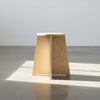
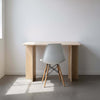
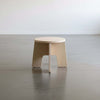


Every furniture brand claims to sell japandi-style pieces now. The word gets slapped on anything that's vaguely minimal and vaguely wooden. But japandi is a specific design language, not a marketing label. It's the intersection of Japanese wabi-sabi (beauty in imperfection, natural materials, restraint) and Scandinavian functionalism (clean lines, light tones, democratic design). A coffee table is either japandi or it isn't, and the distinction comes down to five measurable characteristics.
Here's how to identify them, what separates a japandi coffee table from a generic modern one, and why the UNFNSHED round coffee table qualifies without any modifications.
The 5 Markers of a Japandi Coffee Table
Japandi isn't subjective. If a coffee table has these five traits, it fits the style. If it's missing two or more, it's something else.

- Low profile: 14-16 inches tall. Japanese design favors low seating and low surfaces. Scandinavian tables trend slightly higher, but the japandi sweet spot lands at 14-16 inches. Standard American coffee tables sit at 16-18 inches. That 2-4 inch difference changes the entire proportion of the room. Lower tables make ceilings feel taller and create more visual openness above the table surface.
- Natural wood with visible grain. Not painted. Not lacquered to a mirror finish. Not wrapped in veneer that hides the material underneath. Japandi demands honest materials. You should be able to see and feel the grain of the wood. premium-grade plywood is ideal here because the edge grain, those 13 visible plies, becomes a design feature rather than something to hide.
- Round or soft-cornered shapes preferred. Japanese residential design avoids sharp corners in communal spaces. Round coffee tables fit this principle directly. If the table is rectangular, the edges should be eased or rounded, never sharp 90-degree corners.
- Minimal or no visible hardware. No exposed bolts, no decorative metal brackets, no industrial-style legs. Japandi joinery is either hidden or celebrated as craft (think dovetails or interlocking joints). UNFNSHED uses a tool-free interlocking system that requires zero hardware, which aligns naturally.
- Muted, natural palette. Light woods (birch, ash, maple), warm neutrals, or subdued dark tones (walnut, charcoal). Nothing glossy. Nothing bright. The finish should feel quiet.

Japandi vs. Generic Modern: A Direct Comparison
These two styles get confused constantly because they share some surface-level traits. Both are minimal. Both favor clean lines. But the philosophy behind each is different, and that shows up in the details.
| Feature | Japandi Coffee Table | Generic Modern Coffee Table |
|---|---|---|
| Height | 14-16 inches (low profile) | 16-20 inches (standard) |
| Shape | Round or soft corners preferred | Any shape, often geometric/angular |
| Material | Natural wood, visible grain required | Any material: glass, metal, stone, painted wood |
| Finish | Matte, natural, or oiled | Can be glossy, lacquered, or painted |
| Hardware | Hidden or none | Sometimes exposed as a design element |
| Design Intent | Warmth, imperfection, nature | Visual impact, trend-driven |
| Color Range | Natural tones only | Full spectrum including bold colors |
The biggest tell is material honesty. A generic modern coffee table might use a walnut-print laminate over MDF. A japandi table uses real wood and lets you see it. If the grain is printed rather than grown, it's not japandi. Period.
"Japandi isn't about looking minimal. It's about being minimal. Real materials, honest construction, nothing added for the sake of decoration. If you can't tell what the table is made of by looking at it, it doesn't qualify."
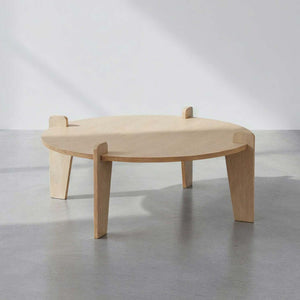
Why the UNFNSHED Round Coffee Table Is Japandi by Default
We didn't design the Round Coffee Table to be japandi. We designed it to be honest, and japandi is what happens when you use real wood, keep the profile low, skip the hardware, and don't hide the material.
Check it against the five markers:
- Low profile? Yes. It sits in the 14-16 inch range.
- Natural wood with visible grain? 13-ply premium-grade plywood, unfinished. Every ply is visible at the edge. The top surface shows natural birch grain.
- Round shape? Yes.
- No visible hardware? Tool-free interlocking assembly, no bolts, screws, or metal brackets. Assembles in under two minutes by hand.
- Muted palette? Ships unfinished, so the raw birch tone is naturally warm and light. You can also stain it darker for a moodier japandi look or apply a clear oil to enhance the grain while keeping the natural color.
Five for five. Not because we reverse-engineered the checklist, but because japandi principles and honest furniture-making overlap almost entirely.
Round vs. Rectangle for a Japandi Living Room
Both shapes can work in a japandi room. The choice depends on your sofa configuration and room proportions.
Round tables work best with L-shaped sectionals, curved sofas, or seating arrangements where people sit on multiple sides. The round shape gives equal access from every angle and softens a room full of straight lines. Rectangular tables work best with linear sofa-plus-two-chairs setups and longer, narrower rooms where a round table would leave dead space at the sides.
The Round Coffee Table and the Rectangle Coffee Table are both cut from the same 13-ply premium-grade plywood and use the same tool-free assembly. The rectangle version has eased edges rather than sharp corners, which keeps it within japandi territory. But if you're building a specifically japandi room from scratch, round is the more traditional choice in Japanese design.
For more on building a japandi room on a reasonable budget, our japandi style on a budget guide covers furniture, layout, and finishing techniques. And for a deeper look at why plywood works as a design material, see plywood furniture: beauty, quality, and iconic design.
Japandi-Ready Coffee Tables
- Round Coffee Table - Low profile, round, 13-ply premium-grade plywood, no hardware. Meets all five japandi markers without modification. Ships unfinished from San Diego.
- Rectangle Coffee Table - Same material and tool-free assembly in a rectangular format with eased edges. Better for linear seating arrangements and narrow rooms.
Frequently Asked Questions
What makes a coffee table japandi style?
A japandi coffee table has five key characteristics: low profile height of 14-16 inches, natural wood with visible grain, round or soft-cornered shape, minimal or no visible hardware, and a muted natural color palette. The style blends Japanese wabi-sabi principles with Scandinavian functionalism, emphasizing honest materials and restrained design over decoration.
How tall should a japandi coffee table be?
14-16 inches is the ideal height range for a japandi coffee table. This is 2-4 inches lower than the standard American coffee table height of 16-18 inches. The lower profile is rooted in Japanese design traditions that favor low seating and low surfaces. The reduced height also makes ceilings feel taller and creates more visual openness above the table.
Is plywood furniture considered japandi?
Yes, when the plywood is high quality and the grain is visible. premium-grade plywood is particularly well-suited to japandi design because the exposed edge grain, showing all 13 alternating plies, becomes a design feature rather than something to conceal. Japandi values material honesty above all else, so visible plywood construction aligns perfectly with the style's principles.