Let's be honest: most "Montessori playrooms" on Instagram look like they belong in a mansion. They have acres of open floor space, expensive climbing arches, and perfectly curated wooden toys.
But for most of us, reality looks a little different. We're working with smaller bedrooms, shared spaces, or a tight corner of the living room. And often, those spaces feel more "chaotic clutter" than "calm oasis."
The good news? The Montessori philosophy isn't about square footage. It's about the "Prepared Environment"—creating a space where your child can do things for themselves without constantly asking for help.
In this guide, we'll show you how to turn a small, cramped corner into a functional "yes space" using simple, child-sized furniture. Whether you're working with a dedicated room or carving out a Montessori corner in your living room, the principles are the same.

What is a Montessori Playroom?
A Montessori playroom is a child-centric space designed to foster independence, concentration, and order. Unlike a traditional playroom that relies on large toy bins, a Montessori space uses:
- Low, open shelving so children can access toys independently.
- Child-sized furniture that fits their body, not yours.
- A limited number of activities (aim for 8–10 at a time) to reduce overwhelm and improve focus.
- Natural materials—wood, cotton, metal—over plastic, because they offer richer sensory feedback.
The emphasis on natural materials is actually a core Montessori principle, not just an aesthetic choice. Maria Montessori believed children learn best through real textures and honest materials. That's one reason furniture-grade plywood works so well—it gives kids a warm, tactile surface that plastic can't replicate.
Setting Up by Age: What Your Child Actually Needs
One mistake parents make is trying to build the "final" Montessori room all at once. In reality, the setup should evolve as your child grows:
6–12 months: Keep it simple. A low shelf with 3–4 toys, a soft mat for tummy time, and an unbreakable mirror mounted low on the wall. A Toddler Step Stool will soon come in handy as they start pulling up to stand.
12–24 months: This is when a low table becomes essential. A weaning table lets them sit for snacks independently. Add a small shelf for toy rotation and a reading corner. Our Kids Table and Chairs is sized perfectly for this stage.
2–4 years: Now you can add a practical life station (more on that below), expand to 8–10 activities on the shelf, and introduce art supplies at their table. The Modern Shelf works as a low bookshelf where they can see and reach every item.
4–6 years: The space shifts toward more complex activities—building, drawing, early reading. A desk or larger table surface, plus higher shelves like Wavy Wall Shelves for displaying completed projects they're proud of.
1. The Work Station: Child-Sized Tables for Focus
In Montessori, play is referred to as "work"—it's how children make sense of the world. But it's hard to do good work when your legs are dangling off a dining chair and the table is at your chin.
To foster focus, a child needs a surface that fits their body.
Our Kids Table and Chairs set is designed specifically for this. It's compact enough to fit in a bedroom corner (or act as a weaning table in the kitchen) but gives your toddler a dedicated spot for:
- Arts & Crafts: Keeping the crayons and glue in one zone.
- Snack Time: Fostering independence by letting them sit and eat without being strapped into a high chair.
- Puzzles & Practical Life: A flat, stable surface for pouring, sorting, and concentration work.
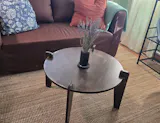
Because it's made from unfinished birch plywood, it's visually quiet. It doesn't scream "primary colored plastic," so it blends in if your play area is part of your main living space.
2. Toy Rotation: Using Low Shelves to Reduce Clutter
If your child dumps out a toy bin and then immediately walks away, they likely aren't trying to be messy. They are overwhelmed. When too many toys are piled together, it creates visual noise that makes deep play impossible.
The solution is Toy Rotation. Pack about 80% of the toys away in a closet and display the remaining 20% on low, open shelves. Most Montessori educators recommend 8–10 activities visible at a time—enough for variety, few enough for focus.

Our Modern Shelf is built for exactly this. It's low to the ground, meaning even a wobbly toddler can see what they want, take it off the shelf, and (eventually) put it back. When every item has a "home" on a shelf rather than a dark abyss in a toy box, cleanup becomes a matching game rather than a chore.
Rotate toys every 2–3 weeks, or whenever you notice your child losing interest. The "new" toys coming back feel exciting even though they've seen them before.
3. The Practical Life Station
This is the most underrated part of a Montessori setup—and the one most parents skip. Practical life activities are everyday tasks sized down for little hands: pouring water between pitchers, spooning beans from one bowl to another, arranging flowers, wiping a table.
Why does this matter? These activities build fine motor skills, concentration, and the confidence that comes from doing something real. A child who can pour their own water doesn't need to ask you every time they're thirsty.
You don't need a separate piece of furniture for this. Just dedicate one shelf of your Modern Shelf or a tray on the Kids Table to a few practical life activities:
- A small pitcher and cup for pouring practice
- A tray with a sponge for wiping up spills
- Tongs or tweezers with pom-poms for transfer work
- A child-sized broom and dustpan in the corner
The key is keeping materials accessible so the child can choose the activity without your help.
4. The Quiet Corner: A Reading Nook for Regulation
Little kids have big feelings. One of the best things you can add to a small room is a designated "cozy corner" where they can go to regulate, read, or just rest.

This doesn't need to be elaborate. A soft rug, a basket of books, and a dedicated seat like our Mini Rocker are all you need.
The Mini Rocker is lightweight and low-profile, so it doesn't dominate the room. The rocking motion is naturally soothing for toddlers, making it the perfect spot for quiet time or reading a forward-facing book.
Display books cover-forward rather than spine-out. Young children choose books by the cover, not the title. Our Wavy Wall Shelves double as a picture ledge for this—mount them low enough for your child to browse independently.
5. The Movement Zone: Keep Open Floor Space
This one is counterintuitive in a small space: leave some of it empty.
Young children need room to move—crawling, rolling, dancing, balancing. The Montessori approach includes gross motor development as a core part of the environment, not just tabletop activities.
In a small room, this might mean a 4x4 foot clearing with a soft mat. That's enough for a toddler to roll around, practice yoga poses, or dance to music. Resist the urge to fill every square foot with furniture.
A Kids Bench along one wall gives them something to climb onto, sit on, or use as a balance beam (they will, whether you plan for it or not). And the Toddler Step Stool naturally invites stepping-up-and-down play that builds coordination.
6. Vertical Storage: Wall Shelves
When floor space is premium, you have to go vertical. But you also want to keep the room feeling soft and playful.

Our Wavy Wall Shelves add a bit of whimsy without the clutter.
- Display Special Items: Put the fragile Lego builds or special heirlooms up high where they can be admired but not destroyed.
- Forward-Facing Books: Use them as a picture ledge to display this week's reading rotation cover-forward.
- Art at Eye Level: Hang one shelf at your child's eye height and use it to display real artwork or family photos. Montessori environments favor real images over cartoon posters.
Tip: always anchor wall shelves to studs or use appropriate wall anchors, especially in a child's room.
Setting Up Montessori in a Shared Space
Don't have a dedicated playroom? Most families don't. Here's how to carve out a Montessori zone in a multi-use room:
Living room corner: A single Modern Shelf and a small rug defines the zone. The unfinished wood blends with most living room aesthetics, so it doesn't look like a daycare exploded in your apartment. Keep a basket nearby for quick cleanup when guests come over.
Shared bedroom: Give each child one shelf that's "theirs." Use Wall Shelves for the older child's items up high, and keep the younger child's activities on the floor-level shelf.
Dining area: A Kids Table next to the family table creates a parallel workspace. Your toddler eats when you eat, draws when you work. They're included without needing a high chair.
The trick is using furniture that doesn't look like "kids furniture." Bright plastic bins scream "this is a mess zone." Natural wood says "this belongs here."
Why Unfinished Plywood for a Montessori Room?
A small space feels bigger when it isn't visually loud. That's why we make everything out of furniture-grade plywood. The natural wood grain adds warmth and texture without clashing with your existing decor.
It also ties directly into the Montessori emphasis on natural materials. Children in a Montessori environment interact with wood, metal, glass, and fabric—real materials that develop sensory awareness. A smooth plywood table teaches different things than a plastic one: how wood feels warm, how it shows grain patterns, how it smells when it's new.
Plus, it's a blank canvas. You can seal it with a clear coat for a natural look, or paint just the legs to match your nursery theme. The furniture adapts to your home, not the other way around.
And because our furniture is tool-free assembly, you can move it between rooms or take it apart when you need the space back. Try doing that with a 60-pound bookcase.
Small Space Montessori Essentials Checklist
- Low, open shelf with 8–10 activities displayed
- Child-sized table and chair
- A cozy reading corner with forward-facing books
- One practical life tray (pouring, spooning, or wiping)
- Open floor space for movement (at least a small mat area)
- Wall shelves for vertical storage
- Art or photos hung at child's eye level
- Natural materials over plastic where possible
- A step stool for reaching sinks, counters, and light switches
Common Questions About Small Montessori Playrooms
At what age should I start a Montessori playroom?
You can begin as early as birth with a simple floor mat and low mirror. A weaning table and chair can be introduced around 6–12 months once the child can sit up. By 12–18 months, most children benefit from a toy rotation shelf and dedicated work surface.
How many toys should be out at once?
Most Montessori educators recommend 8–10 activities at a time. This sounds restrictive, but it actually increases play quality. Fewer options means less decision fatigue and deeper engagement with each toy.
How often should I rotate toys?
Every 2–3 weeks works well, or whenever you notice your child losing interest. Watch for signs: if they walk past a toy for several days straight, it's time to swap it out for something from the closet.
How do I set up Montessori in one room?
Use zones. A small rug defines the play area. A single low shelf holds activities. A kids table in the corner serves as the work station. Wall shelves go vertical for books and display items. You don't need a separate room—you need about 6 feet of wall space and a clear intention.
Do I need to paint unfinished wood furniture for a kids room?
Not required, but we recommend applying a sealant (like beeswax or baby-safe water-based polyurethane) to tabletops to protect them from crayon marks and spills. The natural wood look is perfectly aligned with Montessori aesthetics.
Do I need a Pikler triangle or climbing arch?
They're popular but not essential—especially in small spaces where they dominate the room. A step stool, a bench to climb on, and open floor space for movement cover the gross motor basics without eating your square footage.
Ready to reclaim your playroom?
Create a calm, independent space for your child—no mansion required.
Shop Kids & Montessori Furniture