A plant stand is not a plant accessory. It is furniture. It sits in your living room next to your sofa and your coffee table, and it either contributes to the room or clutters it. The problem with most indoor plant stands is that they're built like garden equipment and styled like an afterthought. Wire frames. Wobbly bamboo. Particle board with a photo-printed wood grain that fools nobody.
This is the breakdown of what actually matters when you're choosing a plant stand for your living room: height, shelf spacing, weight capacity, footprint, and finish. The stuff that determines whether your living room plant display looks intentional or improvised.
Height Creates the Whole Effect
The reason a plant stand works in a living room is vertical layering. Your sofa sits at 18 inches. Your side table is around 24 inches. Your floor plants are at zero. A plant stand introduces height somewhere between 34 and 52 inches, which fills the dead zone between your seated furniture line and the ceiling.

This is why interior designers treat plant stands as display furniture, not utility pieces. You're not just keeping a plant off the floor. You're creating visual depth at a height that nothing else in the room occupies. A trailing pothos on a 40-inch stand draws the eye up and fills vertical space the way a piece of wall art would, but with more dimension.
The key decision: where does the stand go, and what's next to it? A 52-inch tiered stand works beautifully in a corner or flanking a window. Place one next to a sofa and it might tower awkwardly over someone sitting down. For sofa-adjacent spots, 34-38 inches is the sweet spot. It sits taller than the armrest without looming.
Shelf Spacing: The Number Nobody Checks
Most people shop for plant stands by looking at photos. The stand has three tiers, the photos show three small succulents, and it looks perfect. Then you get it home and realize your 10-inch fiddle leaf fig pot doesn't fit between the shelves because the spacing is only 8 inches.
Tiered plant stands typically space shelves between 8 and 22 inches apart. That range is enormous, and the right spacing depends entirely on what you're displaying.
- 8-10 inch spacing: Small pots only. Succulents, air plants, propagation jars. No room for trailing vines or anything with upward growth.
- 12-16 inch spacing: The most versatile range. Fits standard 6-8 inch nursery pots with moderate foliage. Trailing plants like string of pearls or pothos can drape over the edge without hitting the shelf below.
- 18-22 inch spacing: Room for larger ceramic planters and plants with vertical growth. This is where a living room plant display starts to look like a real design statement instead of a shelf full of small pots.
Before you buy anything, measure your tallest pot-and-plant combination. Pot height plus foliage. That number needs to clear the shelf spacing with at least 2 inches to spare, or the plant will look crammed in and you'll constantly be trimming it to fit.
Weight Capacity: Ceramic Pots Are Heavier Than You Think
Here's where cheap plant stands reveal themselves. A 6-inch ceramic pot with a medium-sized plant and wet soil weighs between 8 and 15 pounds. A larger 10-inch ceramic planter with a mature plant can hit 25-30 pounds when freshly watered. Stack three of those on a flimsy metal stand and you've got a collapse waiting to happen.
This is why material matters. Thin wire stands and hollow bamboo poles are fine for lightweight resin pots. But if you're using real ceramic, stoneware, or concrete planters (the ones that actually look good in a living room), you need solid construction. 13-ply premium-grade plywood handles the weight without flexing, warping, or developing the wobble that metal stands get after a few months of being loaded and bumped.
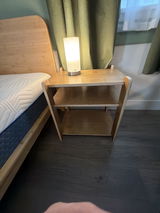
The UNFNSHED Indoor Plant Stand is built from that 13-ply premium-grade plywood, made in San Diego, and goes together in under 2 minutes without tools. It's built to hold real pots with real weight, not just the lightweight plastic containers plants come in from the nursery.
Footprint: Small Stand, Big Impact
Living rooms don't have unlimited floor space, and plant stands shouldn't eat into your walking paths. The most effective indoor plant stands have compact footprints, often around 14 by 14 inches at the base, while building height vertically.
Corners are the highest-value real estate for plant stands. A corner that would otherwise hold dead space or collect dust becomes a living display. Narrow-profile stands tuck into corners without blocking doorways or traffic flow, and the height draws attention to a part of the room that usually gets ignored.
Here's a move that works surprisingly well: the UNFNSHED No-Tool Stool doubles as a single-plant pedestal. It's the same 13-ply premium-grade plywood, the same tool-free assembly, and the right height to put a single statement plant at a level that anchors a corner or fills the gap next to a bookshelf. Sometimes one plant at the right height does more than five plants cluttered on the floor.
Why Unfinished Birch Works for Plant Stands
Plant stands have a unique challenge that most furniture doesn't: they need to look good next to whatever pots you own. Terra cotta, matte black ceramic, white stoneware, glazed blue, woven baskets. Your pot collection probably wasn't bought as a matching set, which means a pre-stained plant stand in dark walnut or espresso might clash with half your planters.
"Unfinished birch is the one finish that works as a backdrop for every planter color and material. It doesn't compete. It contrasts."
Raw premium-grade plywood has a warm, neutral tone with visible ply layers at the edges that read as intentional design, not unfinished business. It pairs naturally with terra cotta, looks clean next to white ceramics, and provides enough warmth to soften matte black pots. That's not an accident. It's the reason premium-grade plywood has been a staple in high-end furniture design for decades.
But maybe you want your plant stand to match your other furniture exactly. That's the other advantage of shipping unfinished. You can stain it, paint it, or seal it to coordinate with your shelves, your coffee table, or the Japandi-inspired minimalist look that raw wood does so well. The finish is your decision, not the manufacturer's guess.
And water? Plants drip. Saucers overflow. Condensation forms on pots in humid rooms. A splash on raw premium-grade plywood dries without damage if you wipe it up reasonably quickly. A splash on veneer or laminate can cause peeling and bubbling that's permanent. Real wood throughout, all 13 plies, means the material is repairable in a way that composites never are.
Putting It Together
The best plant stand for your living room is the one that fits the corner or wall space you have, holds the pots you actually own (at their actual weight), and introduces height where your room needs it. Measure your pots, check the spacing, and think about where in the room you want vertical interest. Everything else follows from there.
UNFNSHED plant stands and pedestals are 13-ply premium-grade plywood, made in San Diego, and assemble in under 2 minutes with no tools. Over 1,060 reviews, 94% five-star. Check out the Indoor Plant Stand, the No-Tool Stool (works perfectly as a plant pedestal), or browse the full Display Shelves collection and All Products.
FAQ
What height plant stand is best for a living room?
It depends on placement. For corners and window-flanking spots, 40-52 inches creates strong vertical interest without blocking anything. For sofa-adjacent placement, 34-38 inches sits taller than the armrest without towering over someone seated. The goal is filling the height zone between your seated furniture line (around 18 inches) and the upper walls.
Can a plant stand hold heavy ceramic pots?
Only if it's built for it. A 10-inch ceramic planter with wet soil can weigh 25-30 pounds. Thin wire and hollow bamboo stands struggle with that kind of load over time. Solid wood construction, like 13-ply premium-grade plywood, handles heavy ceramic pots without flexing or developing a wobble. Always check weight capacity per shelf, not just total capacity.
Should I finish or seal a wooden plant stand?
You don't have to. Raw premium-grade plywood is stable, smooth, and won't splinter. It handles minor water exposure fine as long as you wipe up drips within a reasonable time. If your plants are heavy drippers or you keep the stand in a high-humidity spot, a coat of wipe-on polyurethane adds protection without hiding the wood grain. Many people leave it raw because the natural birch tone works as a neutral backdrop for any pot color or material.