Why Plywood Furniture Stands the Test of Time
|
|
Time to read 8 min
|
|
Time to read 8 min
Table of Contents
Plywood gets a bad reputation. People hear "plywood" and picture cheap shelving from a big-box store or the subfloor under their carpet. But plywood furniture is a different thing entirely. The material that Charles Eames used for his famous lounge chair, that Alvar Aalto bent into the Paimio armchair, that Japanese and Scandinavian designers keep coming back to decade after decade. Plywood, specifically cabinet-grade hardwood plywood like Baltic birch, is made from thin layers of wood cross-laminated and bonded under pressure. The result is a material that's stronger than solid wood of the same thickness, more dimensionally stable, and lighter. It holds screws better, resists warping, and shows its construction honestly through exposed edge layers. That honesty is the whole point. Plywood furniture doesn't pretend to be something it isn't. The visible layers become part of the design. The cross-grain pattern tells you exactly what the material is and why it works. Below, we look at why plywood furniture has outlasted most furniture trends, and why it keeps showing up in the best-designed spaces.
Plywood furniture is lighter than solid wood. A Modern Shelf made from Baltic birch weighs less than half what the same shelf would weigh in solid oak, but holds the same load. That matters if you move apartments, rearrange rooms, or just don't want to wrestle a 90-pound bookcase into position.
The material is also more versatile than solid wood when it comes to design. Plywood can be cut into complex shapes, bent into curves, and joined with interlocking slots instead of traditional hardware. Our Modular Shelf uses this to its advantage: the pieces interlock without screws, glue, or tools because plywood's cross-laminated structure holds tight at the joints. Modular shelving only works because plywood is stable enough to hold itself together without fasteners.
Then there's cost. Solid hardwood furniture is expensive because the raw material is expensive. Plywood uses wood more efficiently, layering thin sheets rather than milling thick planks. The savings get passed on without sacrificing strength. A plywood coffee table or side table made from 13-ply Baltic birch will outlast most solid pine furniture that costs the same or more.
The history of plywood furniture can be traced back to the early 20th century when designers began experimenting with this innovative material to create functional and affordable pieces. Plywood gained popularity during the mid-century modern movement, particularly in the 1940s and 1950s, as architects and designers sought to push the boundaries of traditional furniture design. Pioneers like Charles and Ray Eames, Alvar Aalto, and Arne Jacobsen were instrumental in establishing plywood as a legitimate medium for furniture creation.
One of the most notable achievements during this era was the creation of the Eames Lounge Chair, an iconic piece that combined comfort with striking aesthetics. Made from molded plywood, the chair showcased the potential of the material, emphasizing both its beauty and functionality. The success of such designs propelled plywood furniture into the mainstream, and it quickly became associated with modernist principles of simplicity and elegance.
Over the years, plywood has continued to evolve as a material, with advancements in technology allowing for even more intricate designs. Today, contemporary designers are reinvigorating the classic plywood aesthetic with innovative techniques and fresh perspectives. This enduring legacy speaks to the timeless appeal of plywood furniture, as it adapts to new trends while maintaining its core values of beauty, quality, and functionality.
Among the myriad of plywood furniture designs, several iconic pieces stand out due to their innovation and impact on the design world. The Eames Molded Plywood Chair, for instance, is a classic that exemplifies the marriage of form and function. Its curvilinear shape not only provides comfort but also showcases the aesthetic potential of plywood. The chair has transcended trends, remaining a sought-after piece for collectors and design enthusiasts alike.
Another noteworthy design is Alvar Aalto's Paimio Chair, which highlights the organic qualities of plywood. With its flowing lines and ergonomic form, the chair was designed with human comfort in mind, reflecting Aalto's philosophy of blending architecture with nature. This piece has become synonymous with Scandinavian design, embodying the simplicity and functionality that characterize the movement.
Furthermore, contemporary designers like Joris Laarman have introduced innovative plywood furniture that challenges traditional forms. Laarman's "Wooden Chair," which incorporates digital fabrication techniques, exemplifies how technology can enhance the capabilities of plywood. These modern interpretations of classic designs illustrate the ongoing evolution of plywood furniture, ensuring that it remains relevant and appealing to new generations of consumers.
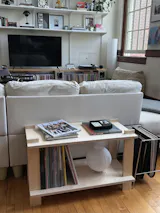
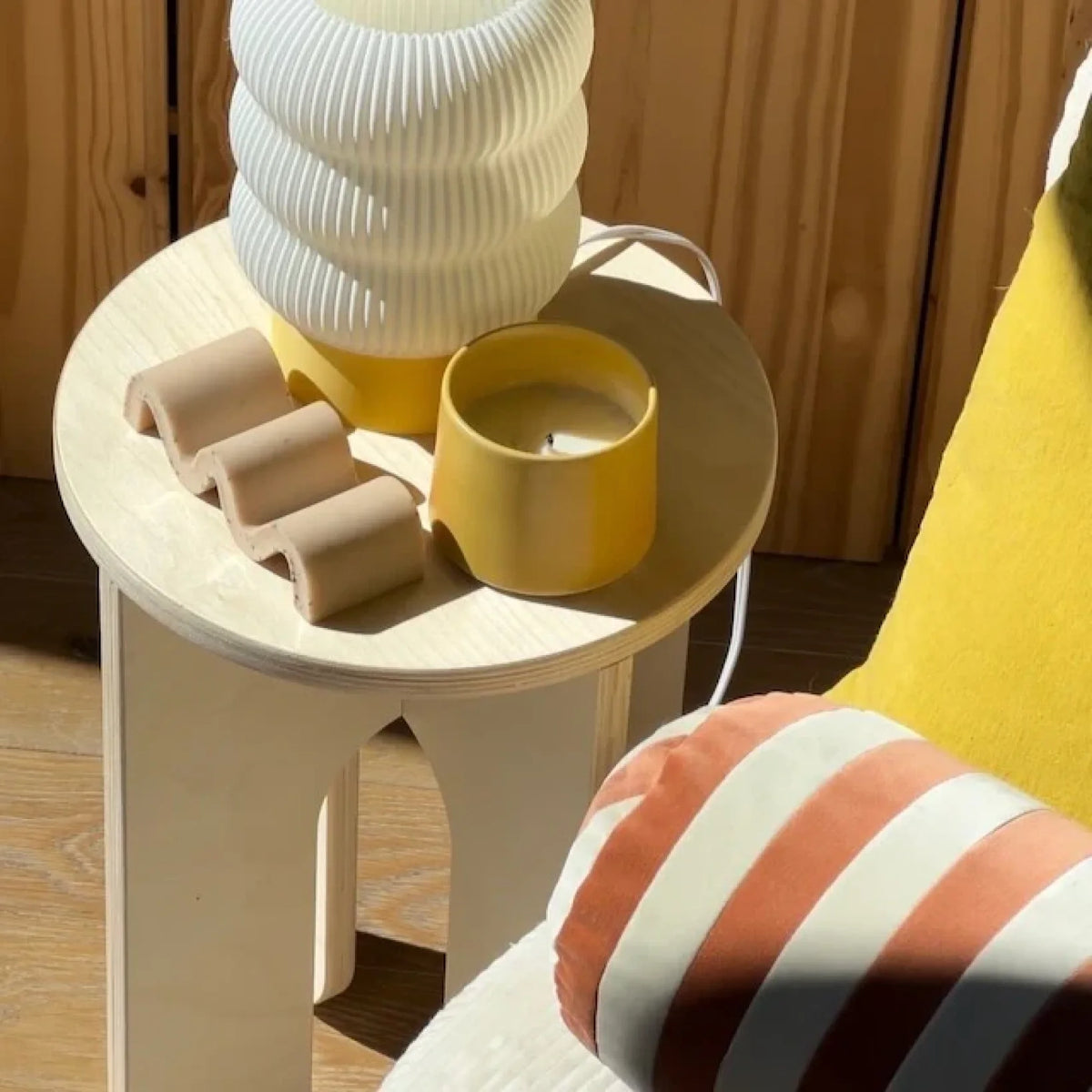
The most distinctive feature of plywood furniture is the exposed edge. Cut a cross-section of Baltic birch and you see 13 alternating layers of wood, each one visible as a thin stripe along the edge. That striped pattern is unique to plywood and it's become a design signature. Our A-Stool and No Tool Stool both show this clearly: the edge layers are part of the visual identity, not something to hide.
The face grain of birch plywood is lighter and more uniform than most hardwoods, which gives plywood furniture a calm, quiet appearance. It pairs well with white walls, concrete floors, linen textiles, and other neutral materials. But it also takes stain and paint well. A coat of dark walnut stain transforms birch plywood into something warm and rich. White paint gives it a Scandinavian feel. Or you can leave it raw and let the natural grain develop a patina over time.
That range is part of what makes plywood furniture work in so many settings. The same Mini Side Table looks completely different stained dark versus left natural. One material, dozens of possible outcomes depending on how you finish it. See our staining guide or painting guide for examples.
The cross-laminated structure of plywood is what gives it an advantage over solid wood in furniture applications. Each layer runs perpendicular to the one below it, which cancels out wood's natural tendency to expand and contract with humidity changes. Solid wood tables crack, warp, and split over time. Plywood doesn't. A 13-ply Baltic birch panel holds its shape through seasonal humidity swings that would ruin a solid pine tabletop.
That dimensional stability also means plywood furniture can use joinery methods that would fail in solid wood. Interlocking slot-and-tab construction, for example, relies on the material staying the exact same size year-round. Our Modern Desk and Nightstand both use this approach: the pieces slide together and hold tight without glue or screws because the plywood doesn't shift.
Maintenance is minimal. Wipe the surface with a damp cloth. If you've applied a finish (polyurethane, stain, or paint), the surface is sealed and resists water rings and minor scratches. If you've left it raw, the birch will darken slightly over time as it oxidizes, which many people prefer. Either way, the structural integrity stays the same for decades.
Plywood furniture doesn't belong to one style. It works across aesthetics because the material itself is neutral. In a japandi-inspired room, birch plywood's light tone and visible edge layers match the Japanese appreciation for natural materials and honest construction. In a Scandinavian space, the same furniture reads as hygge: warm, simple, functional.
In more eclectic or bohemian rooms, plywood provides a grounding element. Paint a wall shelf matte black and it anchors a gallery wall. Leave a bench raw and it contrasts with colorful textiles and patterned rugs. The material adapts because it doesn't carry a strong visual identity of its own. It takes on the personality of the room around it.
Mid-century modern is where plywood furniture has its deepest roots. If you're drawn to Eames and Aalto, the connection is obvious: those designers proved that plywood could be beautiful. But you don't need a vintage original to get the same effect. Contemporary plywood pieces carry the same DNA: exposed layers, clean geometry, and a focus on how the piece functions rather than how decorated it looks.
Selecting the right plywood furniture for your space involves considering both aesthetic preferences and practical needs. When choosing pieces, it’s essential to pay attention to the quality of construction. Look for furniture that features high-grade plywood with a smooth finish, as this indicates durability and longevity. Additionally, consider the design elements that resonate with your style, whether it's sleek lines, organic shapes, or playful forms.
Once you've chosen your plywood furniture, maintaining its beauty is crucial. Regular cleaning is vital to prevent dust and grime buildup. Use a soft, damp cloth to wipe down surfaces, and avoid harsh chemicals that can damage the finish. For deeper cleaning, consider using a wood-specific cleaner that will nourish the material without causing harm. Additionally, avoid placing plywood furniture in direct sunlight or near heat sources, as extreme temperature fluctuations can impact the integrity of the wood.
Lastly, consider applying a protective finish to your plywood furniture to enhance its resilience. A clear varnish or sealant can help preserve the surface while providing an extra layer of protection against scratches and spills. By taking these steps, you can ensure that your plywood furniture retains its beauty and functionality for years to come, making it a cherished part of your home.
A single birch log, peeled into thin veneers and laminated into plywood, yields far more usable furniture material than the same log sawn into solid planks. Plywood is made from thin layers of wood rotary-cut from the log, which means less waste and more furniture per tree. That efficiency is one reason plywood is a more sustainable choice than solid hardwood for furniture production.
The Baltic birch we use comes from managed forests in the Baltic states (Estonia, Latvia, Finland), where birch is a fast-growing species that regenerates quickly after harvesting. These aren't old-growth forests being clear-cut. They're managed timber operations that plant more than they harvest.
Durability is the other sustainability factor. Furniture that lasts 20 years has a fifth the environmental impact of furniture that gets replaced every 4 years. Particle board and MDF furniture (the kind with a printed wood-grain film on top) rarely survives a move. Plywood furniture survives several. That longevity, combined with efficient material use, minimizes waste across the full lifecycle of the product.
Plywood furniture has earned its place. The material is stronger than solid wood, more stable, lighter, and more sustainable. The design history is rich: Eames, Aalto, Jacobsen, and dozens of contemporary makers have all chosen plywood because it does things other materials can't. And the aesthetic is honest in a way that resonated in 1946 and still resonates now.

For a statement seating piece, check out our Modern Lounge Chair - crafted from Baltic birch plywood with no tools needed.
At UNFNSHED, we build every piece from 13-ply Baltic birch plywood and ship it unfinished so you choose how it looks. Browse our japandi furniture or small tables collections to see what's available, or explore the full catalog below.
If you're new to unfinished wood, start with a Mini Side Table or a No Tool Stool. Small pieces are the easiest to finish and the fastest way to see whether plywood furniture fits your space.