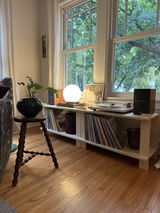
Walk into any Scandinavian furniture showroom and you'll notice something: the wood is light, the lines are clean, and nothing is trying too hard. That's the whole idea. Scandinavian design has always been about letting good materials do the talking. Birch, pine, ash. Honest wood with visible grain, shaped into forms that serve a purpose and skip the decoration. But somewhere between Alvar Aalto's original birch plywood chairs and today's big-box "scandi-style" shelves, something went wrong. Brands started manufacturing shelves from MDF and particle board, painting them white or wrapping them in a printed birch veneer, and calling it Scandinavian. The irony is thick: a design tradition built on material honesty, sold through material deception.
The Problem: "Scandinavian" Shelves That Aren't
Search for "scandinavian shelves" and you'll scroll through pages of white-painted particle board with tapered legs, light grey laminate bookcases, and wire-frame wall shelves in rose gold. Some of them look nice in photos. None of them are Scandinavian in any meaningful sense.

Here's what Scandinavian furniture design actually requires:
- Real wood, not a picture of wood. Birch is the defining material. IKEA was built on it. Artek was built on it. Muuto uses it. The Scandinavian tradition treats birch the way Italian design treats marble: it's the foundation, not an afterthought.
- Form follows function. Every curve, joint, and angle exists for a structural or practical reason. Ornamentation for its own sake doesn't belong.
- Warmth through craftsmanship. This is the hygge part. Scandinavian design isn't cold minimalism. It's warm minimalism. The warmth comes from natural materials you want to touch, not from decorative accessories piled on top of cheap furniture.
- Light tones, natural palette. The Scandinavian color world is whites, creams, warm greys, and the natural blonde of birch and pine. This palette developed because Nordic countries get limited daylight for much of the year. Light wood and white walls bounce what little natural light exists around the room.
Now compare that checklist to a $200 "scandi bookshelf" made from foil-wrapped engineered wood. It might hit the right color. It might have the right silhouette. But the material honesty that defines the tradition? Gone. You're buying a costume, not the real thing.

Why Birch Plywood Is Literally the Scandinavian Material
This isn't a stretch or a marketing angle. Birch plywood is the material that Scandinavian furniture was built on, historically and literally.
Alvar Aalto started bending birch plywood into furniture in the 1930s in Finland. His Stool 60, made from birch plywood with bent birch legs, has been in continuous production for over 90 years. It's in the permanent collection of MoMA. It's in schools, libraries, and homes across Scandinavia. And it's birch plywood, unvarnished, showing its grain and its layered edge construction.
Every UNFNSHED shelf is made from this same material: 13-ply premium-grade plywood, cut and assembled in San Diego. The surface has that characteristic blonde birch tone with visible grain patterns. The edges show all 13 layers stacked together, creating the striped cross-section that's become a hallmark of modern plywood furniture. This isn't a finish applied to look Scandinavian. It IS Scandinavian material, doing what it's always done.
The difference between an UNFNSHED shelf and a designer Scandinavian piece from Muuto or HAY? Mostly the price tag and the logo. The material is the same species of wood. The construction philosophy is the same: clean lines, no unnecessary hardware, let the birch be birch.
Scandi Shelf Ideas: Four Ways to Get the Look Right
1. The Floating Nordic Wall Shelf
Scandinavian interiors love a floating shelf. It's the cleanest possible expression of the idea: a horizontal plane of natural wood, mounted to the wall with no visible brackets. The Wall Shelves give you exactly this in unfinished premium-grade plywood. Mount one above a desk, in a hallway, or in the kitchen. The light birch tone bounces natural light around the room, which is doing exactly what Scandinavian design intends.
Style it scandi: A few white ceramic pieces, one small plant in a simple clay pot, and a candle. Scandinavian styling is warmer and more lived-in than strict minimalism. You're allowed to have a coffee mug up there. You're allowed to have a framed family photo. The key is that each item feels natural, not curated for a photoshoot.
2. The Warm Bookshelf Wall
A full scandinavian bookshelf anchors a living room the way a fireplace does. It adds warmth, texture, and visual weight. The Large Modern Shelf gives you a substantial shelving unit in raw birch. Fill it with books you actually read, objects you actually care about, and some intentional open space. Scandinavian style doesn't demand empty shelves, but it does demand that nothing is there just for show.
Style it scandi: Mix vertical and horizontal book stacks. Add one or two pieces of stoneware or pottery in muted tones. Include something textile, like a small woven basket or a folded linen cloth. The textures matter. Scandinavian design is tactile. You should want to run your hand along the shelf surface.
3. The Modular Nordic Shelving System
Scandinavian design prizes adaptability. Furniture should work for your life today and reconfigure for your life next year. The Modular Modern Shelf fits this philosophy perfectly. It assembles without tools in under two minutes using interlocking joints. No screws. No brackets. Just birch plywood meeting birch plywood. If your needs change, take it apart and rebuild it differently.
Style it scandi: Use it as a room divider in a studio apartment to separate living and sleeping areas. Scandinavian design grew up in small Nordic apartments where every piece of furniture had to earn double duty. A shelf that's also a partition is peak Nordic thinking.
4. The Organic Accent Shelf
Not everything in a Scandinavian room has to be straight lines. Nature is a constant reference point in Nordic design, and organic shapes reflect the forests, coastlines, and landscapes that define the region. The Wavy Wall Shelves bring that natural curve into your space while keeping the material honest. Unfinished birch with a flowing form. It's functional sculpture.
Style it scandi: Let the shape do the work. A single trailing plant, a candle, or nothing at all. When the shelf itself has visual interest, you don't need to load it up.
"Scandinavian design was never about buying expensive things. It was about making honest things from good materials and keeping them for a long time."
Finishing Your Scandinavian Shelves (Or Not)
Every UNFNSHED shelf ships as raw premium-grade plywood. You decide what happens next. Here's how each option maps to the Scandinavian look:
Leave it raw. This is the most authentically Scandinavian choice. The natural blonde birch tone is the color of Nordic design. It's light, warm, and lets the grain patterns show through. Over time, it develops a gentle patina that adds character. Aalto's original birch pieces from the 1930s have aged beautifully precisely because the wood was left to be itself.
Light oil or wax. A coat of natural oil (tung oil, linseed oil, or danish oil) deepens the grain slightly and adds subtle protection without changing the color significantly. This is a classic Scandinavian furniture treatment. The wood stays matte and tactile. No plastic sheen, no sealed-off feeling.
White wash or light grey wash. A diluted white or grey paint wash lets the birch grain show through while shifting the tone cooler. This is popular in coastal Scandinavian interiors and works well in rooms with a white-and-wood palette. Our guide on painting unfinished wood furniture covers the technique for getting a wash right without covering the grain.
What to avoid: Dark stains, high-gloss finishes, and solid paint coverage. All of these hide the birch grain, which defeats the purpose. If you're covering up the wood, you're covering up the most Scandinavian thing about the shelf.
The Price Problem With Nordic Shelving
Designer Scandinavian shelving from brands like Muuto, String, and HAY runs $400 to $1,200 for a single unit. That's the price of heritage branding, European manufacturing, and retail distribution. The materials? Often the same premium-grade plywood, sometimes with a clear lacquer coat.
On the other end, budget "nordic shelving" from mass retailers is $50 to $150 but uses engineered wood, foil wraps, and hardware that loosens over time. It looks Scandinavian for about six months before the laminate edges start peeling.
UNFNSHED sits in a different space entirely. Real 13-ply premium-grade plywood. Made in San Diego, not shipped from overseas. Tool-free assembly in under two minutes. No laminate, no veneer, no MDF core. The Double Modern Shelf gives you a proper birch plywood shelf with the same material integrity as the designer versions, at a fraction of what you'd pay for a Scandinavian brand name.
With 1,060+ reviews and 94% of them five-star, the quality is verified by people who've actually lived with these shelves, not just photographed them.
Browse the full wall shelves collection or the display shelves collection to find the right piece for your space. For more on why birch plywood has earned its place in modern furniture, read the case for plywood furniture. And if you're curious about how Scandinavian and Japanese design overlap, our Japandi style guide covers that territory.
Every piece ships flat, assembles in under two minutes with no tools, and arrives unfinished and ready for whatever you want it to be. Or ready to stay exactly as it is. Because raw birch plywood already looks like Scandinavian furniture. That's not coincidence. That's the point.
Frequently Asked Questions
What wood is used in Scandinavian furniture?
Birch is the most iconic Scandinavian furniture wood. It's been central to Nordic design since the 1930s when Alvar Aalto pioneered bent birch plywood furniture in Finland. Pine and ash are also common. All three share the light, warm tone that defines the Scandinavian palette. premium-grade plywood, the material used in UNFNSHED shelves, is the same species used by designers like Artek, Muuto, and IKEA.
Do scandinavian shelves have to be white?
No. White is popular in Scandinavian interiors because it maximizes natural light in northern climates, but Scandinavian shelves are traditionally natural wood tone, not painted white. The warm blonde of birch or pine is the signature look. If you want a white shelf that still reads as Scandinavian, a white wash over natural birch lets the grain show through, which is more authentic than a solid white paint coat over MDF.
What is the difference between Scandinavian and japandi shelves?
Scandinavian shelves tend to be warmer and more lived-in. The hygge influence means your shelves should feel cozy and inviting, with personal objects, books, candles, and textiles. Japandi blends Scandinavian simplicity with Japanese wabi-sabi, resulting in a more austere, pared-back look with fewer objects and more empty space. Both styles use natural wood and clean lines, but Scandinavian leans toward comfort while japandi leans toward restraint. Both work naturally with unfinished birch plywood.