In a small apartment, your desk is never just a desk. It's where you eat dinner when the kitchen table is covered in mail. It's a vanity when you're getting ready in the morning. It's a catch-all for keys, sunglasses, and that package you keep meaning to open. In 400 to 600 square feet, every piece of furniture pulls double duty whether you planned it that way or not.
So choosing a desk for a small apartment isn't really about finding something "cute" or "space-saving." It's about finding something that earns its footprint. That means real dimensions, honest clearance numbers, and a piece you can actually move, reconfigure, or disassemble when your studio apartment demands it. Here are seven rules for getting it right.
Start With Width, Not Style
Before you look at a single desk, figure out what's actually sitting on it. This determines everything.

- Laptop only: 32 to 40 inches wide is plenty. This is the sweet spot for most small apartment desk ideas because it fits against a wall, in a corner, or even at the foot of a bed.
- Laptop plus external monitor: 42 to 47 inches. You need room for the monitor and enough surface left over for a notebook or coffee.
- Dual monitors: 50 inches minimum. Honestly, if you're running dual monitors in a studio apartment, you might want to rethink the setup. A single ultrawide takes less linear space.
Most compact desks for apartments land in the 32 to 47 inch range, which covers the majority of use cases. Wider than 47 inches and you're eating into your living space for diminishing returns.
Depth Is the Dimension That Tricks You
Width gets all the attention. Depth is what actually determines comfort. A depth of 24 inches allows proper focal distance from a monitor, giving your eyes the 20 to 26 inches they need between the screen and your face. Go shallower than that and your monitor sits too close, which means eye strain by mid-afternoon.
But here's the trade-off for small apartments: you can get away with 18 to 20 inches of depth if you mount your monitor on an arm. The arm pushes the screen back and up, reclaiming that desk surface for actual work. In a tight apartment desk setup, a monitor arm isn't a luxury. It's how you make a compact desk functional.
Account for the Space Behind the Desk
This is where most people miscalculate their apartment desk setup. You measure the desk. You measure the wall. You forget about the chair.
You need 18 to 24 inches of clearance behind the desk just for a chair to exist. If you want to actually push back from the desk and stand up without performing a gymnastics routine, plan for 36 inches. In a studio apartment averaging 400 to 600 square feet, those 36 inches behind your desk might represent a meaningful chunk of your total floor plan.
The fix: place the desk against a wall so the chair pushes into open room space rather than into a hallway or doorway. Corner placement works even better because it borrows space from two walls and keeps circulation paths clear.
Plan for Assembly and Disassembly
In a small apartment, furniture moves. Guests come over and suddenly your desk needs to become a buffet table. You rearrange twice a year because the current layout makes the place feel cramped. You move apartments every 12 to 18 months because that's how renting works.
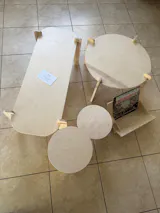
A desk that takes 45 minutes and an Allen wrench to assemble is a desk that stays put even when it shouldn't. A desk that assembles in under 2 minutes with no tools, using an interlocking joint system, is a desk you'll actually reposition when you need to. Our Modern Desk uses exactly this system. Slide the pieces together, they lock. Pull them apart, they store flat. That's the kind of flexibility a tool-free assembly gives you in a small space.
Match the Landlord's Walls, Not the Internet's Aesthetic
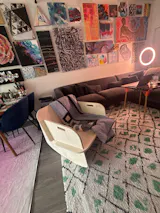
Studio apartments come with whatever paint the landlord chose. Beige, gray, off-white, or that specific shade of cream that exists only in rental units. Pre-finished furniture in walnut or black might clash. Pre-finished furniture in "natural oak" might also clash, because every manufacturer's version of natural is different.
Unfinished wood solves this. You can paint it, stain it, or leave it raw to match whatever your apartment looks like right now. And when you move to a place with different walls, you sand it lightly and refinish. Try that with a laminate desk.
13-ply Baltic birch plywood, which is what we use, has a clean grain that works whether you go Scandinavian-light or moody-dark. It's also structural-grade, meaning it won't sag, warp, or delaminate the way particleboard does when it gets humid, which happens in small apartments with limited airflow.
Build Vertically When You Can't Build Outward
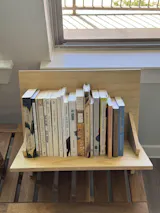
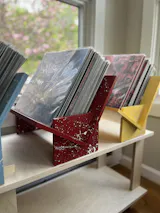
A compact desk for apartment living only handles the horizontal surface. But small apartments need vertical thinking. A monitor stand lifts your screen to eye level and creates usable storage underneath, essentially giving you a second shelf on the same footprint. A monitor riser is a must-have in any small apartment desk setup for exactly this reason.
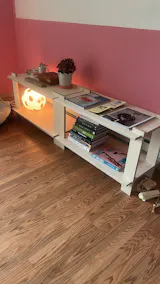
Same principle applies to shelving above the desk. Instead of a wider desk with drawers, go narrow and add wall-mounted shelves for books, supplies, and the things that would otherwise pile up on your work surface.
Know Your Apartment's Real Capacity
A home office needs 30 to 50 additional square feet minimum. If your studio is 400 square feet, that workspace is taking 8 to 12 percent of your total living area. That's significant. Studios generally need 500 to 600 square feet to comfortably fit a dedicated workspace without the apartment feeling cramped.
If you're under 500 square feet, the best desk for a studio apartment is one that can disappear. That means compact dimensions (32 to 40 inches wide), tool-free disassembly for storage, and no permanent commitment to one corner. Your desk should be a guest in the room, not the room's defining feature.

"In 400 square feet, every piece of furniture is an argument for or against your sanity. A desk that assembles without tools, matches any wall color, and actually fits your monitor distance isn't a compromise. It's the only thing that makes sense."
The Pieces That Work in Small Apartments
The Modern Desk
13-ply Baltic birch. Tool-free interlocking assembly in under 2 minutes. Ships unfinished so you can paint, stain, or leave it raw. Made in San Diego. Compact enough for studios, sturdy enough for daily use.
Computer Monitor Stand
Lifts your screen to proper eye height and creates storage underneath. Same Baltic birch, same tool-free assembly. Pairs with the desk to give you vertical space without adding to the footprint.
FAQ
What size desk fits in a studio apartment?
For a laptop-only setup, a desk that's 32 to 40 inches wide and 20 to 24 inches deep fits comfortably in most studios. If you use an external monitor, aim for 42 to 47 inches wide and 24 inches deep. Remember to leave 18 to 24 inches behind the desk for your chair, and ideally 36 inches if you want to push back and stand up without bumping into anything.
Can you use an unfinished wood desk in a rental apartment?
Unfinished wood is actually ideal for rentals. You can paint or stain it to match whatever wall color your landlord chose, and refinish it when you move to a new place. Raw Baltic birch won't damage floors the way metal or rough-bottomed furniture can. And because our desks disassemble without tools, moving day is one less headache.
How much space does a home office take up in a small apartment?
A basic desk setup needs 30 to 50 square feet, including the desk surface and chair clearance. In a 400-square-foot studio, that's roughly 8 to 12 percent of your total space. Studios in the 500 to 600 square foot range handle a workspace more comfortably. If you're tight on space, a compact desk at 32 to 36 inches wide with a monitor arm keeps the footprint minimal.