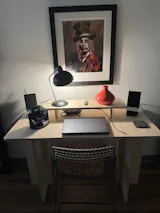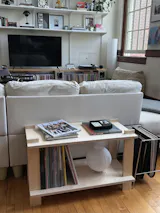
Every minimalist desk is clean. Not every minimalist desk is japandi. The difference sounds subtle until you see it side by side: a white laminate desk with chrome legs next to an unfinished birch desk with visible wood grain. Both have clean lines. Both reject clutter. But one feels cold and manufactured. The other feels warm and alive. That warmth is the entire point of japandi, and it comes from one place: the material. A japandi desk doesn't hide what it's made of. It leads with it.
What Makes a Desk "Japandi" Instead of Just "Minimalist"?
Japandi is a design philosophy born from two traditions that shouldn't have anything in common but share almost everything. Japanese minimalism brings wabi-sabi, the belief that imperfection is beautiful. A knot in the wood, a variation in the grain, an edge that isn't laser-perfect. These are features, not defects. Scandinavian design brings hygge, the pursuit of warmth and comfort through honest materials like wood, linen, and wool.

Put those together and you get a clear set of rules for what a japandi desk actually is:
- Natural materials front and center. Real wood with visible grain, not particleboard with a printed texture.
- Clean lines, zero unnecessary hardware. No decorative drawer pulls, no chrome accents, no fussy details that exist only to look busy.
- Low-profile form. Japandi borrows the Japanese preference for lower furniture. A japandi desk sits quietly in the room rather than dominating it.
- Muted, warm palette. Beiges, taupes, soft greys, charcoal. Nothing high-gloss. Nothing cold white.
- Every element functional AND beautiful. If a design detail doesn't serve a purpose, it gets removed. But the things that remain should look good doing their job.
Now compare that checklist to your standard minimalist desk. Most of them hit the "clean lines" requirement and stop there. The surface is white melamine or grey laminate. The legs are powder-coated steel. The vibe is more surgical than serene. Minimalism tells you to remove things. Japandi tells you to remove things and then pay attention to what's left.

The White Laminate Problem
Here's the comparison that makes the difference obvious. Picture two desks in the same room:
Desk A: White laminate top, thin metal legs, smooth uniform surface. It's minimal. It's clean. It also looks exactly like every other desk in every IKEA-furnished apartment you've ever been in. The surface has no texture, no variation, no warmth. It reflects light in a flat, even way that reads as "office" more than "home."
Desk B: Unfinished Baltic birch plywood top. The grain is visible, flowing in natural patterns that are slightly different on every piece. The edge reveals 13 layers of cross-banded birch, creating a striped cross-section that's become a signature of modern plywood design. The color is a natural warm beige that shifts slightly depending on the light. It reads as "handmade" even in a mass-produced context.
Desk B is japandi without trying. The material does the work. You don't need to add a linen desk pad or a ceramic organizer to make it feel warm (though both would look great on it). The wood itself provides the texture, warmth, and subtle imperfection that the style demands.
This is the argument in one sentence: a japandi desk shows its material. A minimalist desk often hides it.
Why Unfinished Birch Is Japandi by Default
The UNFNSHED Modern Desk wasn't designed as a japandi desk. It was designed as a simple, well-made desk from 13-ply Baltic birch plywood, built in San Diego, with tool-free assembly in under two minutes. No drawers. No hardware. No finish. Just wood and interlocking joints.
But that description happens to be a perfect match for what japandi asks for. Here's why it works:
The grain is real. Every surface shows the natural pattern of Baltic birch. No two desks look exactly the same. Wabi-sabi, built into the manufacturing process without any extra effort.
The construction is visible. Those 13 plies are exposed at every edge. In most furniture, exposed plywood edges are considered unfinished. In japandi interiors, they're considered honest. The layered edge has become one of the most recognizable details in modern Scandinavian-Japanese design.
The color palette is already right. Unfinished Baltic birch sits in a natural warm beige that falls directly into the japandi muted palette. No stain needed. No paint needed. The raw wood IS the colorway.
The form is low-profile. No hutch, no shelving unit bolted to the back, no built-in drawers adding bulk below the surface. The desk is a surface and four legs. It doesn't compete with the rest of the room for attention, which is exactly how Japanese-influenced design wants furniture to behave.
"Japandi celebrates imperfection. So why are most 'japandi desks' sold online made from perfectly uniform laminate with a printed wood texture? The material should be real, or the label doesn't mean anything."
Building a Japandi Desk Setup
The desk is the foundation, but a japandi desk setup extends to everything on and around it. Here's how to build one that actually follows the philosophy rather than just borrowing the aesthetic.
On the Desk: Less Than You Think
Japandi home office design borrows from the Japanese concept of ma, the intentional use of empty space. Your desk surface should be at least 40% open. That negative space isn't wasted. It's doing the same work as a pause in a conversation.
What stays: your screen (raised on a monitor stand for ergonomic height), keyboard, mouse, and maybe one object that brings warmth. A small unglazed ceramic cup for pens. A single plant in a simple clay pot. A handmade coaster. One item. Not a collection.
The UNFNSHED Monitor Stand pairs naturally with the desk because it's the same material: raw Baltic birch with matching grain. It raises your screen to eye level while creating storage space underneath for a keyboard or notebook. One piece, two functions, zero visual noise. That's japandi math.
Behind the Desk: Warm, Not Stark
A scandinavian japanese desk setup differs from standard minimalism in the wall treatment behind the desk. Minimalism often leaves the wall white and bare. Japandi wants texture. A woven wall hanging in natural linen. A single piece of art in muted tones. Open shelving with three carefully placed objects. The wall behind a japandi home office desk shouldn't feel empty. It should feel intentional.
Around the Desk: Natural Everything
The chair should be wood, leather, or upholstered in a natural fabric. The rug (if you use one) should be wool or jute. The lighting should be warm, not cool white. Every material in a japandi desk setup should be something you'd find in nature. If it's made from plastic and trying to look like something else, it breaks the whole composition.
The Finish Is Your Call
Because the desk ships unfinished, you have options that no pre-finished japandi desk gives you:
Leave it raw. This is the most japandi move you can make. The natural birch tone is already in the palette, and the wood will develop a subtle patina over time from light and use. That slow aging is wabi-sabi in action.
Light oil or wax. A coat of tung oil or danish oil deepens the grain slightly and adds a soft sheen without looking glossy. It also provides basic moisture protection. This leans into the Scandinavian side of japandi, where warmth and tactile comfort take priority.
Muted paint wash. A diluted wash of warm grey, soft white, or charcoal lets color settle into the grain while keeping the texture visible underneath. This is different from solid paint. You're whispering color onto the surface, not shouting it. Our guide on painting unfinished wood furniture covers the technique in detail.
What to avoid: high-gloss finishes, thick polyurethane, anything that makes the wood look like plastic. The whole point of a japanese minimalist desk is that you can see and feel the wood. Sealing it under a thick coat of shine defeats the purpose.
Japandi on a Budget (Because the Style Demands It)
There's an irony in expensive japandi furniture. The philosophy itself is about restraint, honest materials, and rejecting excess. Charging $1,200 for a desk because it has "japandi" in the product name contradicts the ethos of the movement it claims to represent.
The smarter approach: start with furniture made from real materials with clean lines, and skip the style markup. The Modern Desk and Monitor Stand from UNFNSHED aren't priced as japandi products. They're priced as well-made Baltic birch furniture. The japandi part comes from what they already are, not from a branding exercise.
With 1,060+ reviews and 94% of them five-star, the quality is proven. These pieces have been in japandi home offices, Scandinavian apartments, and wabi-sabi studios without ever needing the label to justify the product. Our full japandi style on a budget guide breaks down the philosophy room by room if you're building out a full space.
For more on why a monitor riser belongs in every desk setup, read why a monitor riser is a must-have. And browse the complete home office furniture collection or all products to find the right pieces for your space.
Frequently Asked Questions
What is a japandi desk?
A japandi desk combines Japanese minimalism and Scandinavian simplicity. It features clean lines, natural materials with visible wood grain, no unnecessary hardware, and a muted warm palette. The key difference from a standard minimalist desk is warmth and imperfection: a japandi desk celebrates the natural texture of the material rather than hiding it under laminate or high-gloss paint.
Can I turn an unfinished desk into a japandi desk?
Yes, and it's actually the easiest path. An unfinished wood desk is already doing most of the work: visible grain, natural color, tactile surface. Leave it raw for the purest japandi look. Or apply a light oil to deepen the grain, or a thin paint wash in a muted tone like warm grey or soft white. The point is to let the wood show through. Our guide to painting unfinished wood covers techniques that preserve the grain while adding subtle color.
What is the difference between japandi and minimalist furniture?
Minimalist furniture focuses on removing the unnecessary, which often results in sleek, cold surfaces like white laminate and chrome. Japandi goes further by requiring that what remains is warm, natural, and slightly imperfect. A minimalist desk can be made of any material. A japandi desk needs to be made of a material worth looking at, like real wood with visible grain, because the material itself is part of the design.