Between 2000 and 2018, 459 children died from furniture tip-overs in the United States. Ninety-three percent of those kids were five or younger. That CPSC stat should change the way every parent thinks about shelves for nursery rooms. This isn't a Pinterest styling guide. It's a practical breakdown of how to choose baby room shelves that are actually safe, actually useful, and don't need replacing every 18 months when your newborn becomes a toddler with a death grip and zero fear.
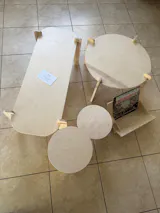
We make furniture for this exact scenario. Every UNFNSHED piece is built from 13-ply Baltic birch plywood in San Diego, assembles in under two minutes with no tools (interlocking joints, no screws), and ships completely unfinished. In a nursery, that last part matters more than you'd think.

Anchor Everything. No Exceptions.
The CPSC's data is clear: roughly 11,000 children end up in emergency rooms every year because of furniture and TV tip-overs. Twenty-four percent of fatal incidents involve furniture alone, not a TV falling. Just the furniture. The STURDY Act, which took effect in September 2023, now requires mandatory stability standards for clothing storage units, but shelves and bookcases still rely on voluntary standards.
What does that mean for you? Wall-mounted nursery wall shelves eliminate tip-over risk entirely because they're bolted to studs. If you prefer a freestanding unit, anchor it with anti-tip hardware. The CPSC's Anchor It! campaign contributed to a nearly 50% decline in tip-over injuries. Anchoring works. Do it on day one, not after a scare.
Size Your Shelves for the Kid, Not the Room
Most nursery shelving ideas you'll find online are designed for the camera, not the child. A Montessori nursery shelf should be 20 to 24 inches tall for kids under three, with books displayed front-facing so covers are visible. Smaller setups (around 23 inches high by 30 inches wide with three tiers) hold 10 to 15 books comfortably, roughly two or three per level. That's plenty. Toddlers get overwhelmed by too many choices anyway.
Our Large Modern Shelf works well as a front-facing nursery bookshelf when mounted 12 to 16 inches off the ground. The lip keeps books upright while covers stay visible. Introduce this kind of setup when your child starts getting mobile, typically late infancy into early toddlerhood. They'll actually use it independently, which is the whole point of the Montessori approach.
Control What Touches the Surface
VOCs (volatile organic compounds) from conventional furniture finishes can irritate eyes, nose, and throat. Repeated exposure has been linked to liver, kidney, and central nervous system damage. In a room where your baby sleeps 12+ hours a day, that's not something to ignore.
Starting with unfinished wood means you pick the finish. Some options worth knowing about:
- Milk paint bonds naturally with wood using milk proteins and pigments. No plastic film, no off-gassing.
- ECOS Lullaby line is formulated specifically for nurseries. Zero VOC furniture paint.
- AFM Safecoat carries Greenguard certification at zero VOC.
- Pure tung oil cures hard with no VOCs and no synthetic coating.
- Beeswax is a natural sealant that's non-toxic and hypoallergenic.
Or leave the Baltic birch raw. It's smooth, warm-toned, and contains zero added coatings. Read our guide to safe wood finishing around kids for step-by-step instructions.
"A nursery shelf should survive three phases: the decorating phase, the grabbing-everything phase, and the 'I want THAT book at 5 AM' phase. Plan for all three from the start."
Use Two Heights, Not One
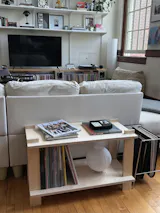
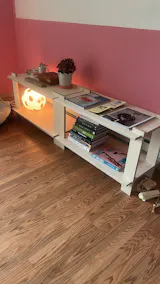
The smartest nursery shelving idea is also the simplest: separate what's for the baby from what's for you. The Double Modern Shelf gives you two tiers. Stock the lower level with board books and soft toys (things meant to be grabbed). Keep the monitor, white noise machine, and that ceramic fox from the baby shower up top where small hands can't reach.
For floating shelves, a depth of about 6 inches is sufficient for photos, small plants, and lightweight toys. The standard nursery floating shelf runs around 24 inches wide by 7 inches deep, which holds more than you'd expect without dominating the wall.
Skip Metal Brackets and Exposed Hardware
Once your kid starts cruising (pulling up on furniture and walking along it, usually around 9 to 12 months), every surface becomes a handhold. Metal shelf brackets with sharp edges, protruding screws, and pointed corners are a problem at forehead height. Baltic birch plywood has naturally smooth edges, and our interlocking joint system means zero exposed fasteners. No bolts to catch on clothing. No metal corners at toddler-skull level.
Trending nursery design leans toward soft edges and organic shapes for exactly this reason. It's not just an aesthetic preference. It's practical.
Buy a System, Not a Single Shelf
Nurseries become toddler rooms become big-kid rooms. Buying new shelves every two years is wasteful and annoying. The Modular Shelf lets you start with a simple nursery layout and expand as your kid's book collection grows (and it will). Same material, same style, more storage.
Because everything ships unfinished, you can paint it sage green for the nursery, sand it down in three years, and restain it whatever color your kid demands next. Try that with laminated particleboard.

UNFNSHED Shelves for Nursery Rooms
Wall Shelves
Mounts directly to studs. Zero tip-over risk. Perfect for monitors, sound machines, and decor that needs to stay above the grab zone. 13-ply Baltic birch, ready for whatever finish you choose.
Large Modern Shelf
Mount low for a Montessori-style front-facing book display or higher for general nursery storage. Strong enough for heavy board books without sagging over time.
Double Modern Shelf
Two-tier design separates baby-accessible items from adult-only objects. The nursery shelf that actually accounts for what happens at month 12.
Modular Shelf
Start small, add units as your child grows. Nursery shelving that converts to a full kids' room storage system without buying new furniture.
See all options in the display shelves collection.
Keep Exploring
Frequently Asked Questions
What type of shelf is safest for a nursery?
Wall-mounted shelves are the safest option for any nursery because they eliminate tip-over risk completely. They anchor directly to wall studs, so there's nothing for a toddler to pull down. If you use a freestanding bookshelf, secure it to the wall with anti-tip hardware. The CPSC reports that the Anchor It! campaign helped reduce tip-over injuries by nearly 50%, so wall anchoring makes a measurable difference. Look for smooth edges and no exposed metal hardware.
What finish is safe to use on nursery furniture?
Zero-VOC finishes are the standard for nursery furniture. Milk paint, beeswax, pure tung oil, and products like ECOS Lullaby paint (designed specifically for nurseries) are all safe choices. Avoid conventional paints and lacquers that can off-gas in an enclosed room where your baby sleeps for hours. Starting with unfinished solid wood gives you full control over what touches the surface.
How tall should a Montessori bookshelf be?
For toddlers under three, a Montessori bookshelf should be 20 to 24 inches tall. This puts books at the child's eye level so they can choose independently. Books should be displayed front-facing (covers out, not spines), with two to three books per level. A three-tier shelf around 23 inches high by 30 inches wide holds 10 to 15 books, which is enough variety without overwhelming a young child.