







A narrow console table does something no other piece of furniture can: it fills the dead zones in your home without filling the room. Entryways, hallways, the space behind your sofa, the blank wall in a studio apartment. The right table turns those forgotten strips of floor into intentional space.
This guide covers eight ways to use and style a narrow console table, with specific measurements, what to put on it, and why the material under the finish matters more than most buyers realize.
What counts as narrow
In furniture terms, a narrow console table is anything with a depth of 12 inches or less. Most entryway furniture runs 14 to 18 inches deep. A true narrow table at 10 to 12 inches passes in front of a sofa without blocking legroom and fits a hallway where a standard table would force you to turn sideways.
"The test for narrow is simple: can someone walk past it comfortably with a coat on?"
Height matters too. Standard console height is 28 to 32 inches, which lines up with most sofa back heights. Entryway tables often run a few inches taller, at 34 to 36 inches, so a bag or keys drop naturally onto the surface.
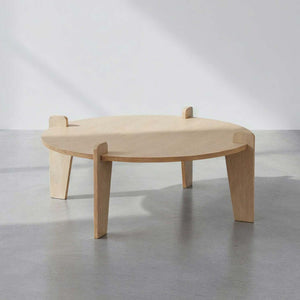
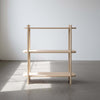
 The UNFNSHED Modern Console Table in an oval profile. At 12 inches deep, it fits entryways and behind sofas without blocking traffic.
Eight places a narrow console table actually works
1. The entryway landing zone
Put it within three steps of your front door. Height at 34 inches. Use the surface for keys, a small tray, and one plant. Nothing else. The entryway table earns its spot by stopping the pile-up that would otherwise happen on your kitchen counter.
2. Behind the sofa
Sofa back heights run 28 to 34 inches. Match your console to the top of your sofa or go one inch under. This creates a visual shelf that appears to be part of the sofa arrangement. Use it for a lamp and two low objects. If it is taller than the sofa back, it reads as furniture sticking out from behind the sofa, which is not the look.
3. The blank hallway wall
Hallways under 36 inches wide should use a table no deeper than 10 inches. Hallways 36 to 48 inches wide can take 12 inches. Beyond that, use whatever fits with 24 inches of clear passage remaining. A table in a hallway gives the eye a place to rest and the space a reason to exist beyond transit.
4. Dining room sidebar
A console table along a dining room wall becomes a serving surface for dinner parties. At 30 to 32 inches it lines up with most dining tables. Load it with wine, a serving dish, or candles during a meal. Clear it for everyday use.
5. Home office credenza
A narrow table behind a desk chair doubles as storage for a printer, external drives, and reference books. It keeps the desk surface clean. Choose something with a lower shelf so you have a second level of storage without adding a full credenza.
6. Bedroom dresser alternative
In a small bedroom where a full dresser would block the window or door swing, a narrow table along one wall holds a lamp, an alarm, and a book. Not a replacement for clothing storage, but a surface that earns its floor space in rooms where every inch matters.
7. Living room side anchor
Anchor one end of a sofa with a console table instead of an end table. The console runs the full length behind the sofa arm. It visually extends the sofa grouping and gives you surface space on both sides rather than just one.
8. Studio apartment divider
A narrow console table placed perpendicular to the room, with a sofa backed up to it, creates a visual division between the sleeping area and the living area without a wall. The table acts as a spine the room organizes around.
 A console table works hardest when it anchors a corner rather than floating on an open wall.
What to put on a narrow console table: the three-item rule
A narrow surface punishes clutter faster than a wide table because there is nowhere to push things to the back. Use the three-item rule: one tall item, one medium item, one small item. That is the limit.
"Three items, three heights. Anything more and the table reads as a storage surface instead of a design element."
Why the material under the finish matters more than the finish
Most narrow console tables on the market are MDF or particleboard wrapped in veneer or paint. The finish looks identical to solid wood or plywood at the point of sale. The difference shows up two or three years in, when the corners chip, the humidity of a mudroom or entryway warps the substrate, or a dropped key leaves a dent that punches through the veneer into the particleboard beneath.
Why solid plywood works
- Cross-laminated layers resist warping in humid entryways
- Chips expose another layer of wood, not hollow core
- Can be sanded and refinished without destroying the surface
- Edges hold paint and oil without absorbing like MDF
What to know about MDF and particleboard
- Susceptible to swelling in humid or entryway conditions
- Edge chips are difficult to repair cleanly
- Cannot be refinished in the way solid wood or plywood can
- Heavier than plywood for equivalent thickness
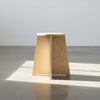
The UNFNSHED Modern Console Table is 13-ply premium-grade plywood with no hardware and no tools for assembly. It comes in an oval and a rectangle profile. At 12 inches deep and 51 inches long, it fits behind most standard sofas and along entryway walls without commanding floor space. You can finish it with any oil, paint, or stain after delivery, or leave it raw and let the plywood grain show.
How to measure before you buy
 Assembly without tools or hardware means you can break it down and move it to a new apartment without leaving screws behind.
If you are still deciding between sizes and profiles, the UNFNSHED Modern Console Table product page shows both the oval and rectangle variants with dimensions and finish options. For styling reference across a wider room, the console tables collection has the full lineup.
Narrow console table questions
How narrow is too narrow for a console table?
Below 8 inches of depth, a console table becomes too shallow to hold anything stable. Most objects need at least 10 inches of depth to sit without tipping. For functional use, stay between 10 and 14 inches deep.
What is the standard height for a console table?
Standard console table height is 28 to 36 inches. Entryway tables tend toward 34 to 36 inches. Tables meant to sit behind a sofa should match the sofa back height, which is usually 28 to 32 inches.
Can I put a console table behind a sofa in a small apartment?
Yes. A 10-to-12-inch-deep console table behind a sofa adds only the same footprint as the sofa itself. In a studio apartment, a console table behind the sofa creates a visual room divider between the living and sleeping zones without using an actual wall.
What should I put on a narrow console table in an entryway?
A key tray or bowl, one lamp or tall vase, and one plant or small object. Limit yourself to three items on the surface. Entryway console tables are high-traffic surfaces that collect clutter fast, so a strict object limit keeps them functional.
Is plywood better than MDF for a console table?
For an entryway or any humid or high-traffic space, yes. Plywood holds screws better, resists humidity warping, and when chipped shows wood rather than crumbling substrate. MDF is cheaper to produce but requires more care in damp conditions.